“visceral and deeply moving”
The Superstorm
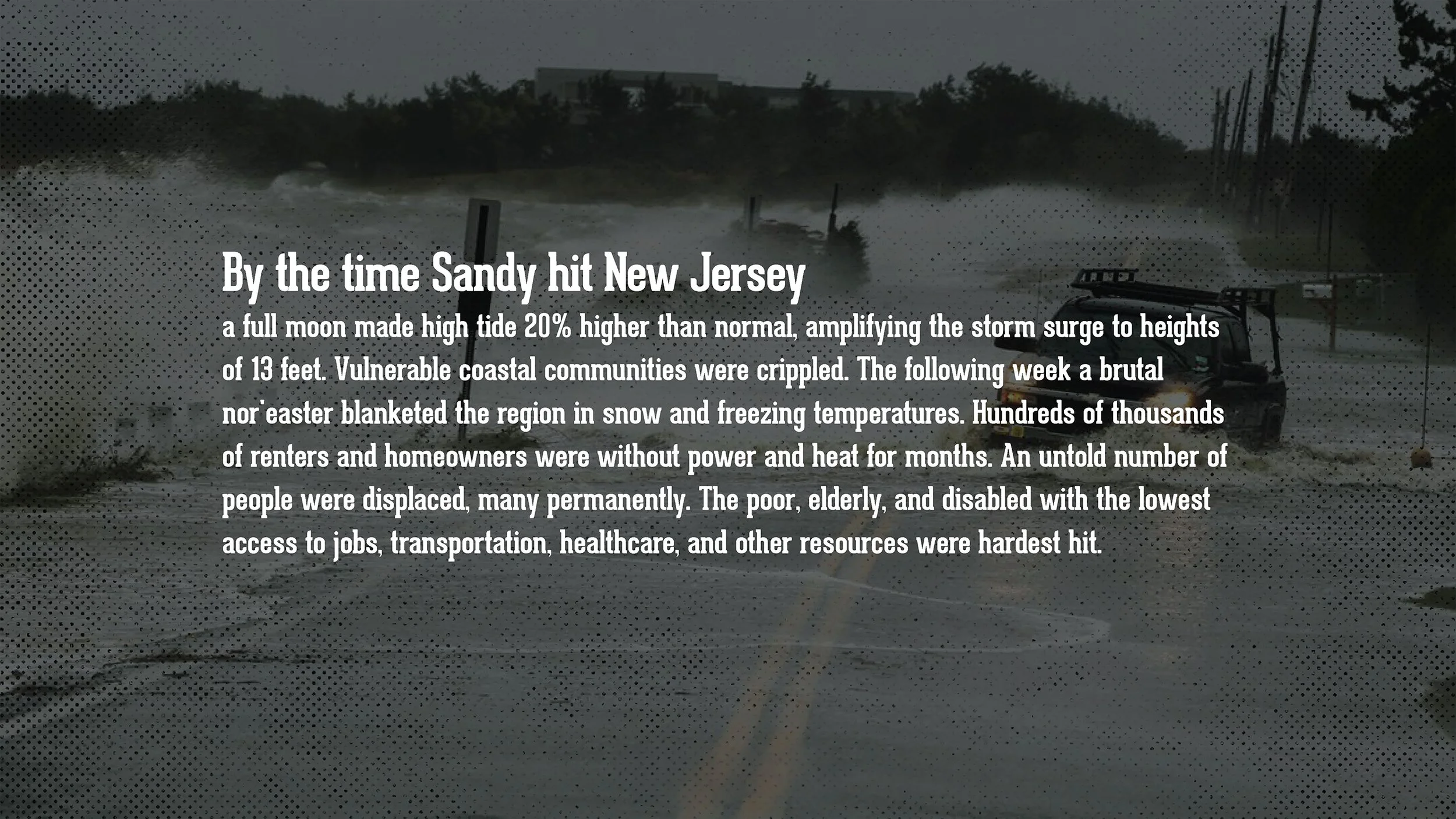
On October 24, 2012 Tropical Storm Sandy became a hurricane. Over the next few days it hit Jamaica, Cuba, and the Bahamas. And caused flooding, damage, and deaths in Haiti, Dominican Republic, and Puerto Rico.
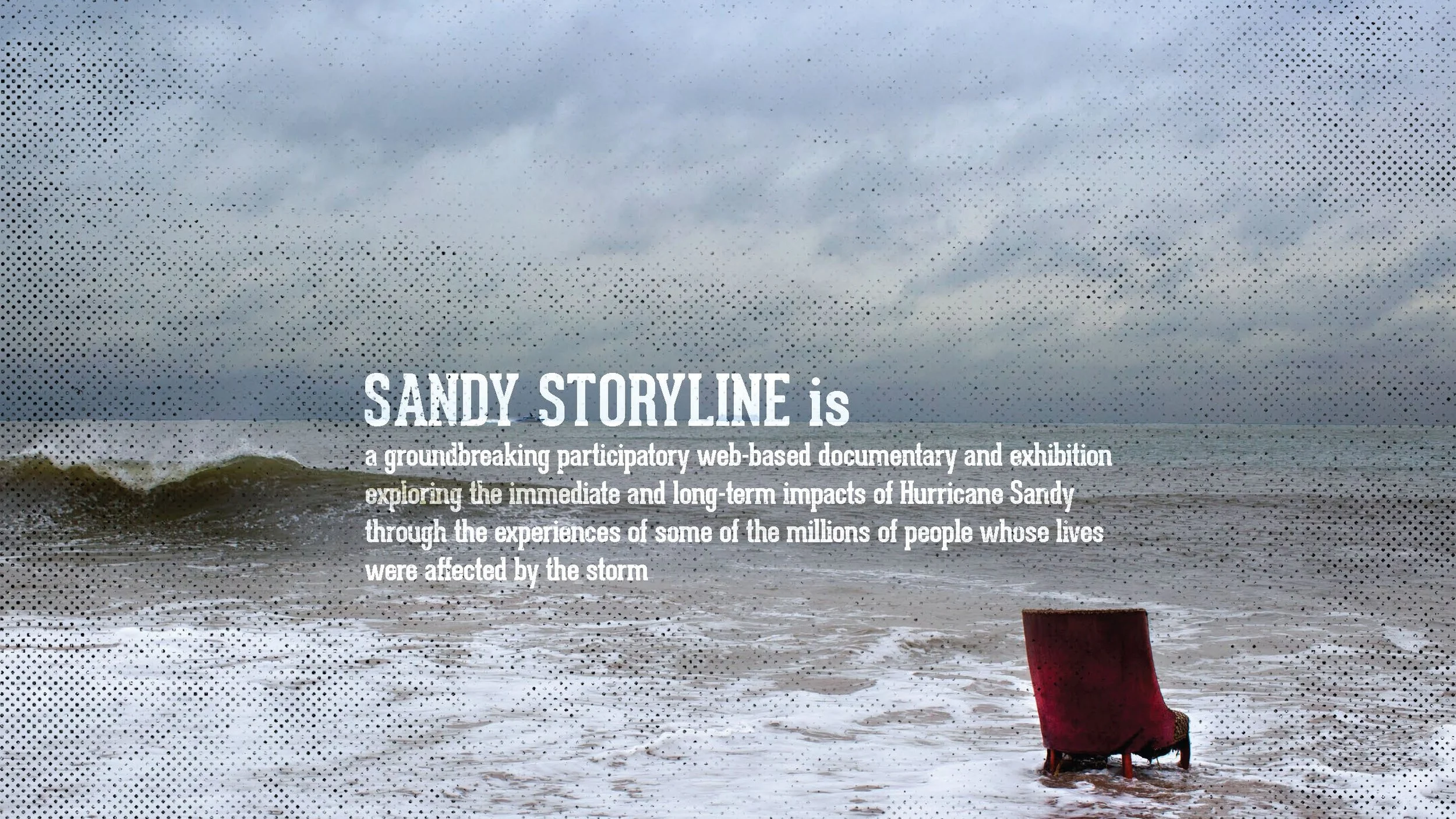
Abnormally warm sea temperatures caused by human-induced climate change enlarged the storm as it traveled along the the coast of Florida. Atlantic hurricanes are typically forced east out to sea as they head north. But as Sandy arced away from the East Coast it was blocked by a ‘kink’ in the jet stream created by melting Arctic ice. This forced the hurricane back towards New Jersey. The unusual merger of two large weather systems, and the media’s usual sensationalism, lead TV outlets to nickname the hurricane, “Superstorm Sandy.” It became the largest Atlantic Hurricane on record, by diameter, impacting 24 US States, and 8 countries.
Our Response
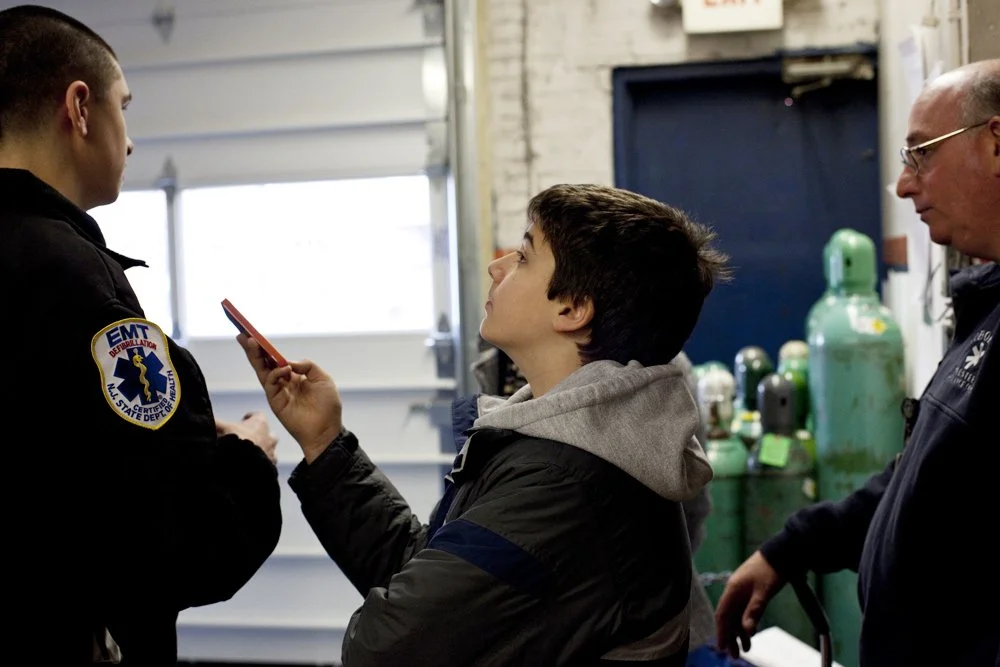
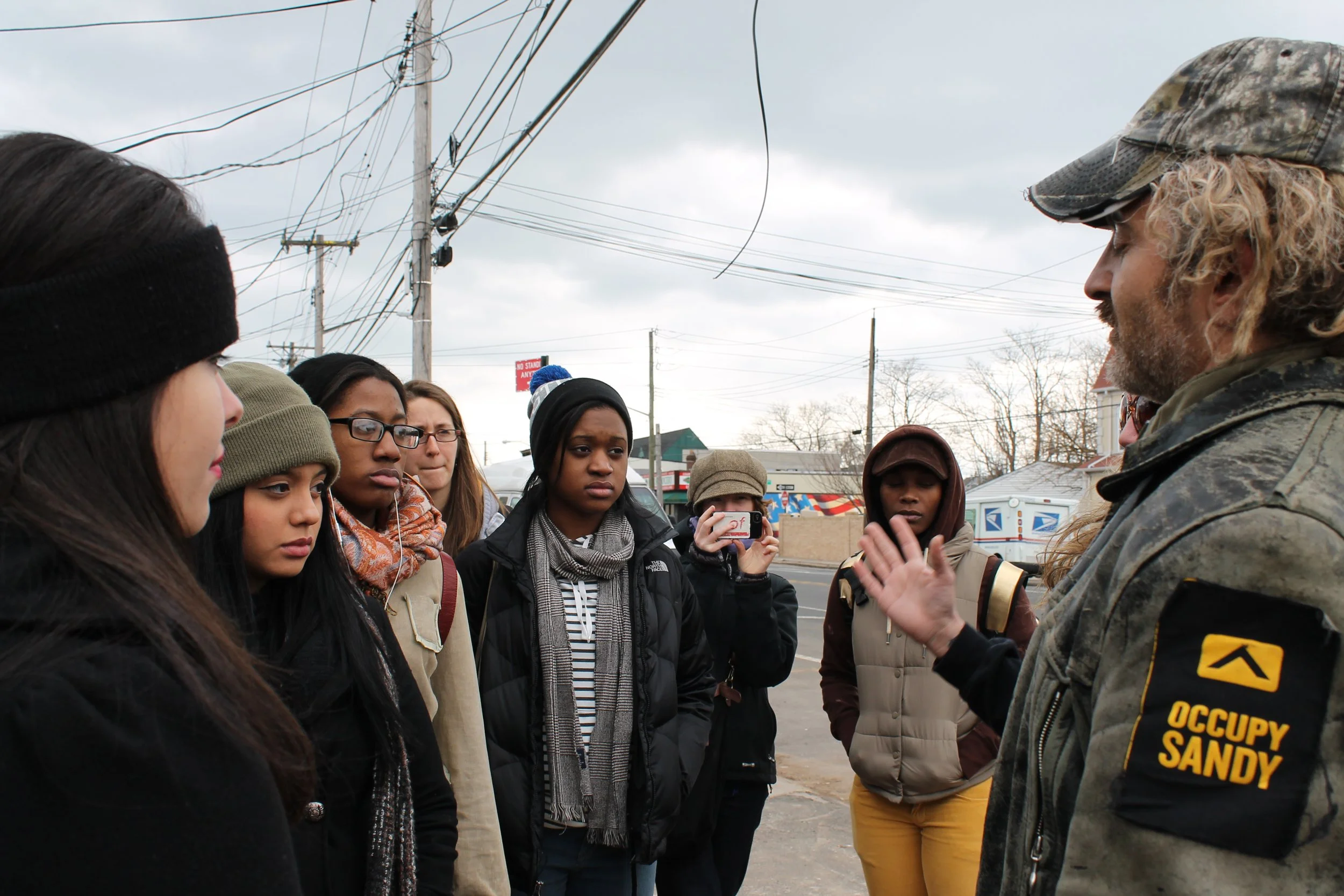
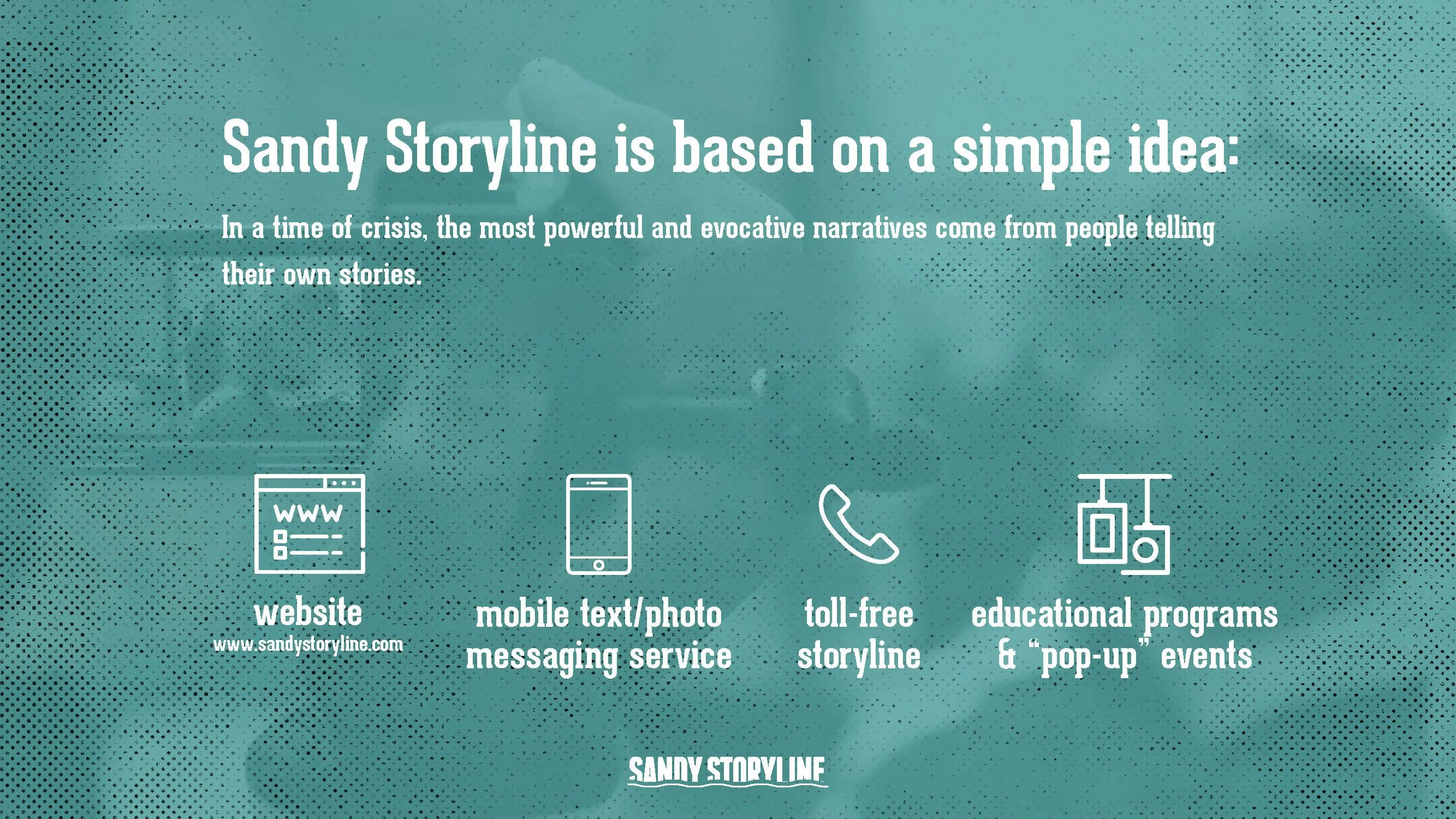
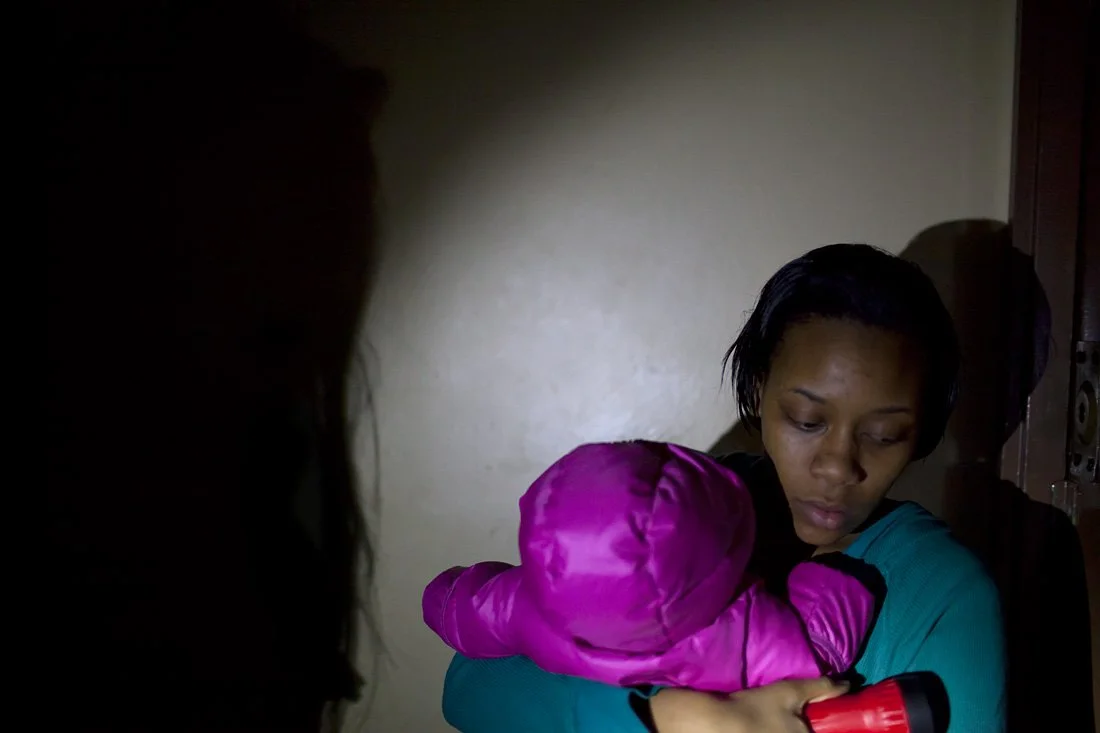
As meteorologists began to forecast Hurricane Sandy would hit the tri-state area hard, the Storyline team made two decisions. Along with a couple friends from Occupy Wall Street, we mobilized a response that we named Occupy Sandy. The effort became a massive regional community-led relief and rebuilding effort. We also convened several Occupy friends, journalists, and two colleagues at MIT’s Center for Civic Media to create Sandy Storyline. We knew that storytelling, direct relief, and long term rebuilding needed to be intertwined.
The Process
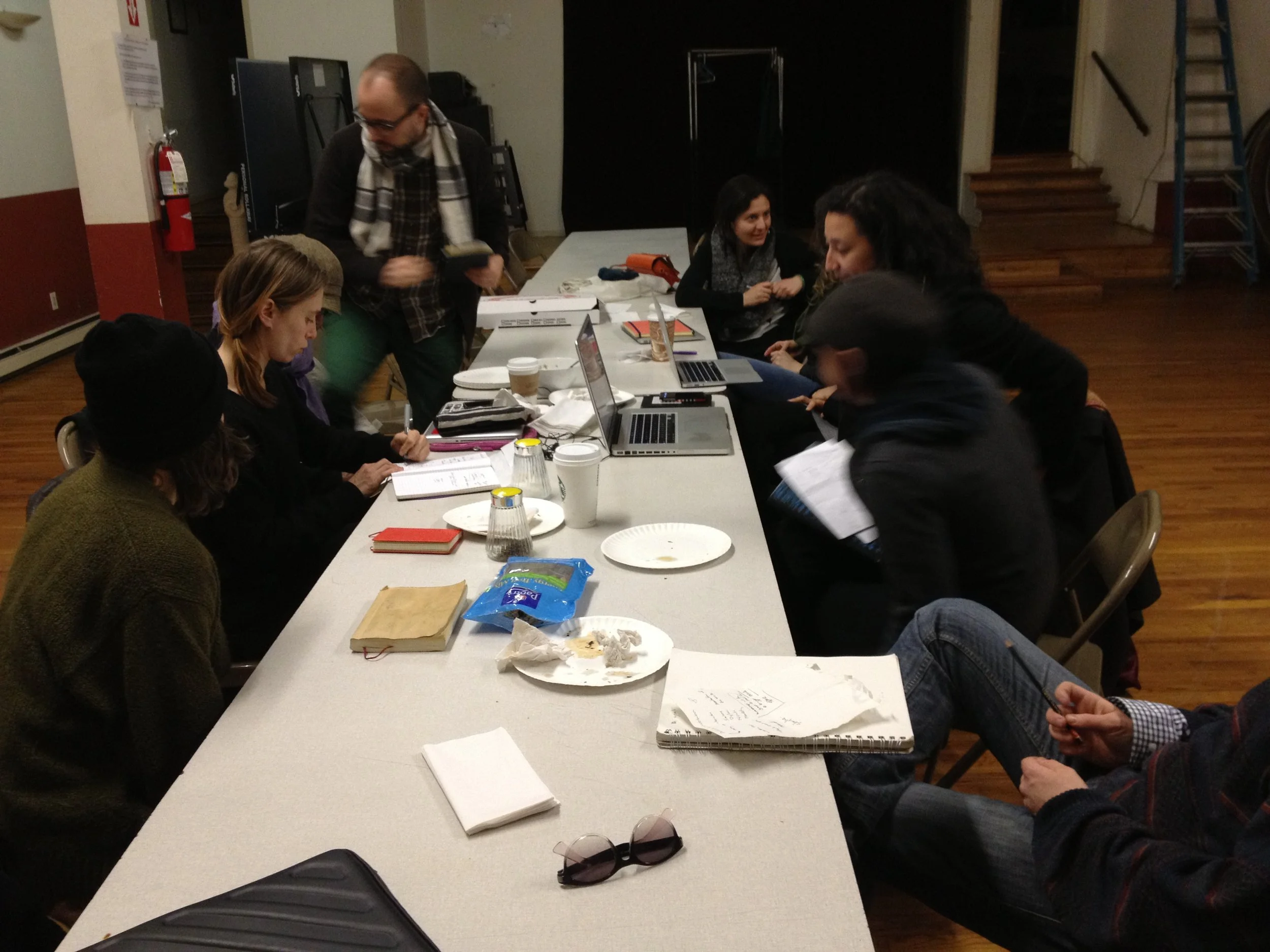
The initial team that created Sandy Storyline began meeting before the storm made landfall. In the following days and weeks, the team would grow considerably. Our friends at MIT’s Center for Civic Media lead the process of mapping possible tools that would facilitate submissions and distribution of stories. App-based smartphones weren’t ubiquitous yet. Instagram was only two years old. It didn’t allow audio or video, and was not widely used among affected communities. We needed solutions to reach across demographics.
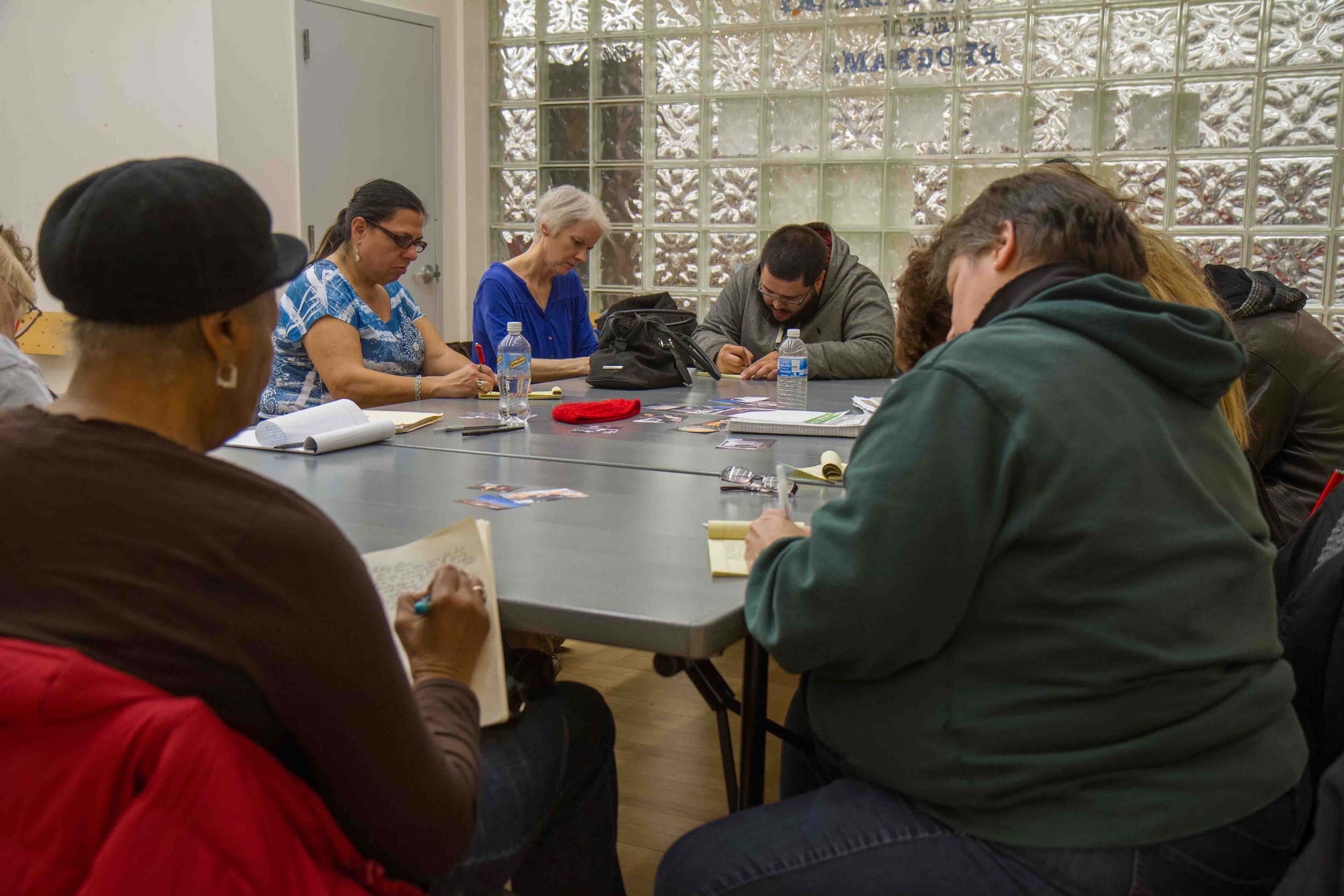
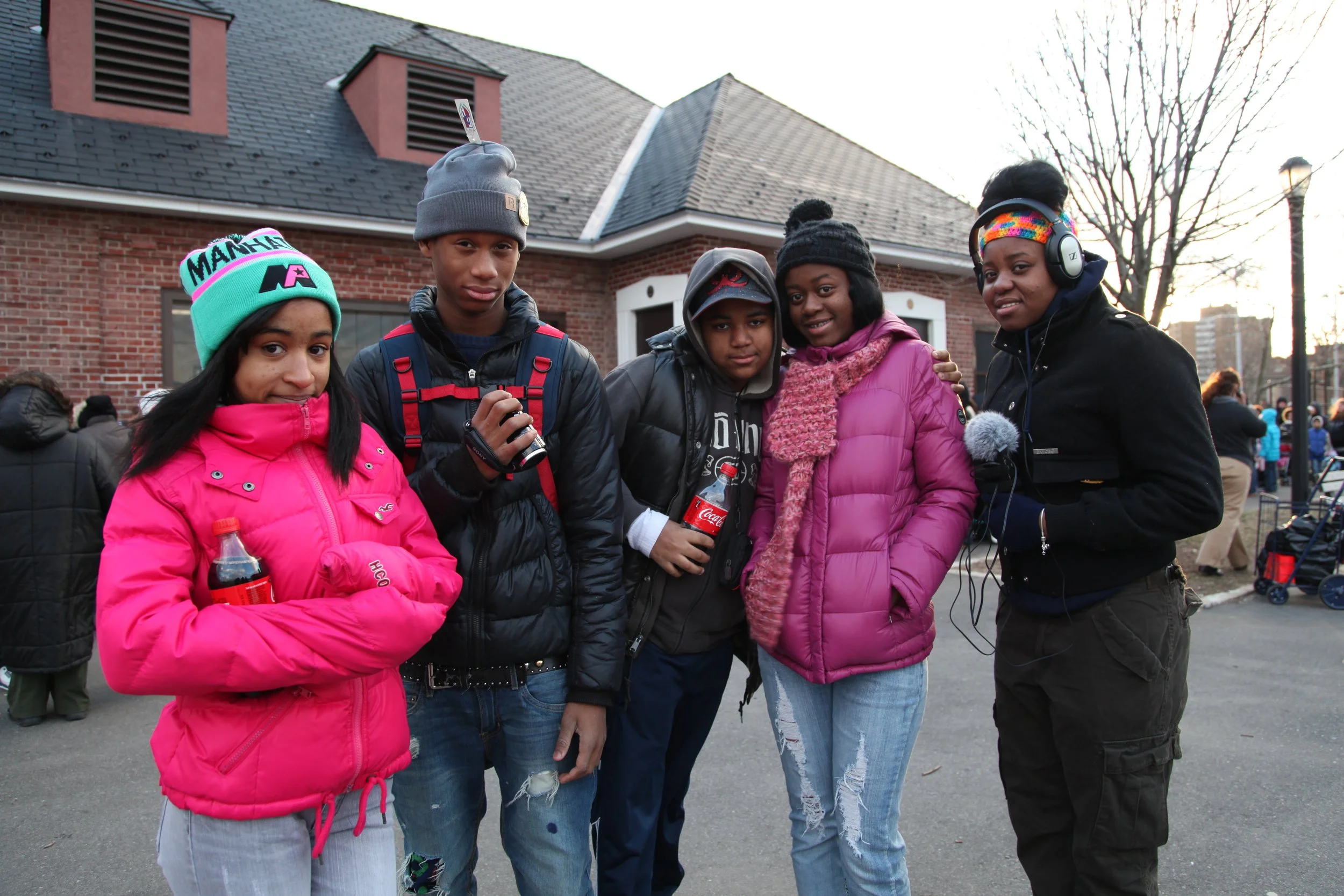
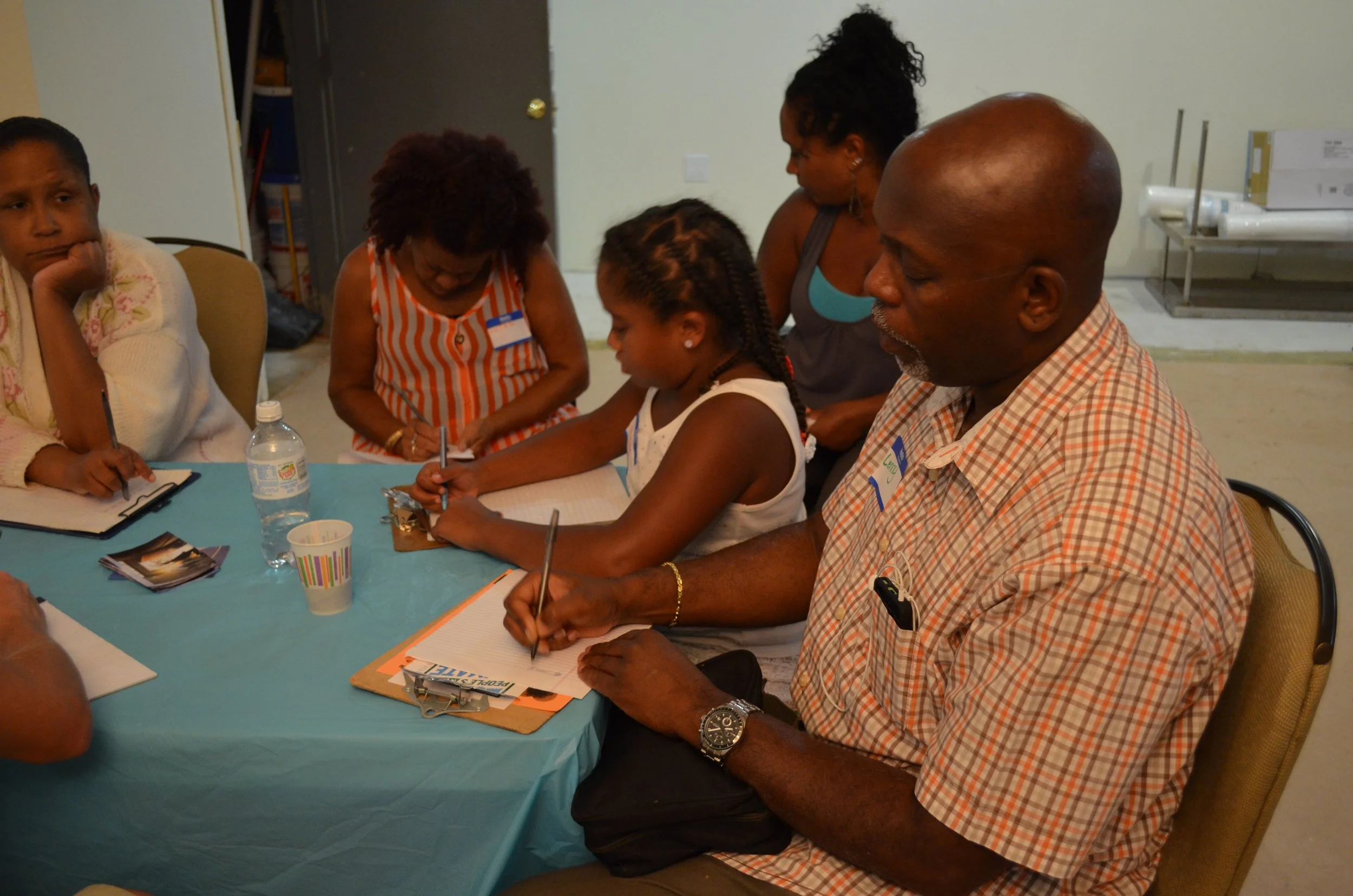
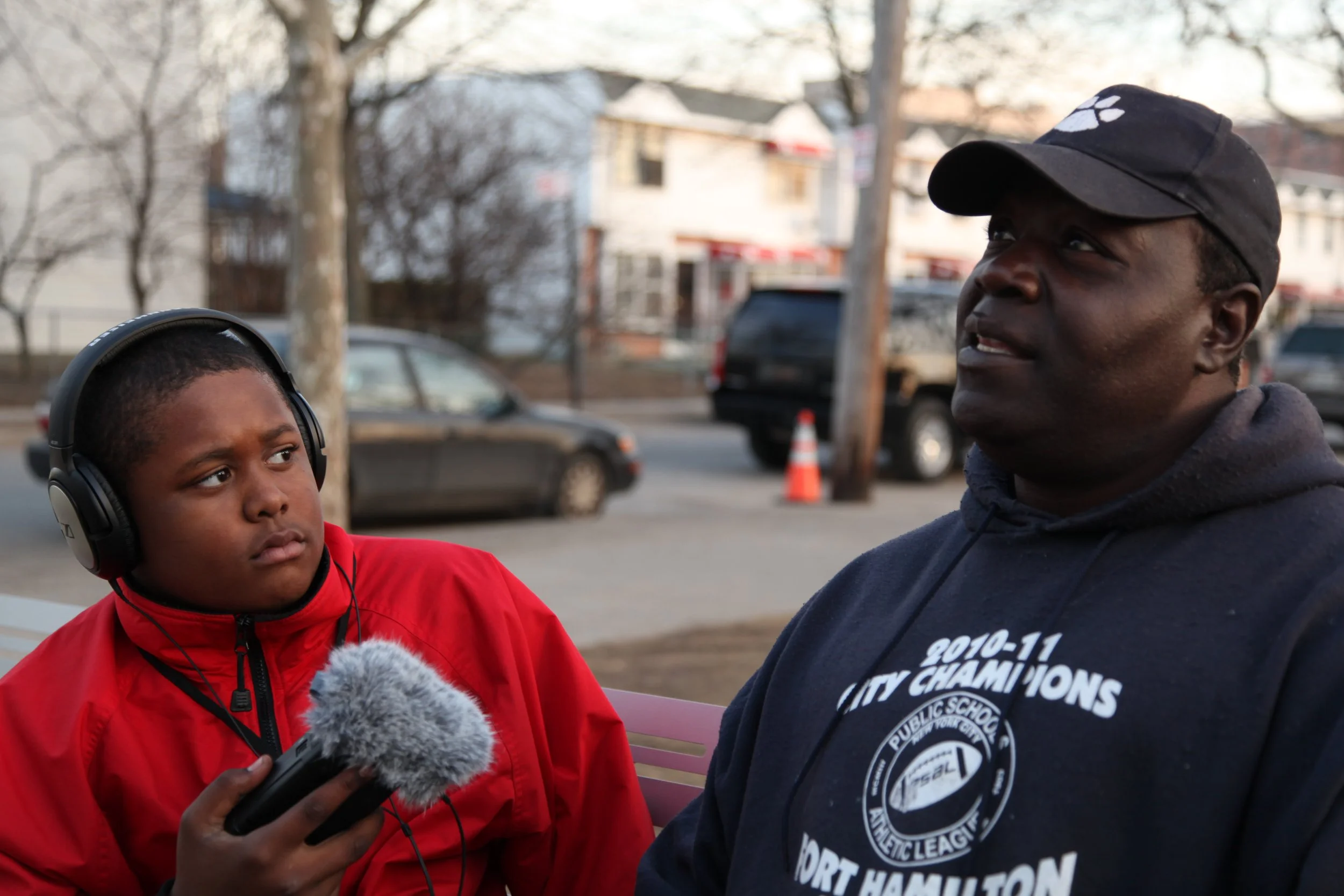
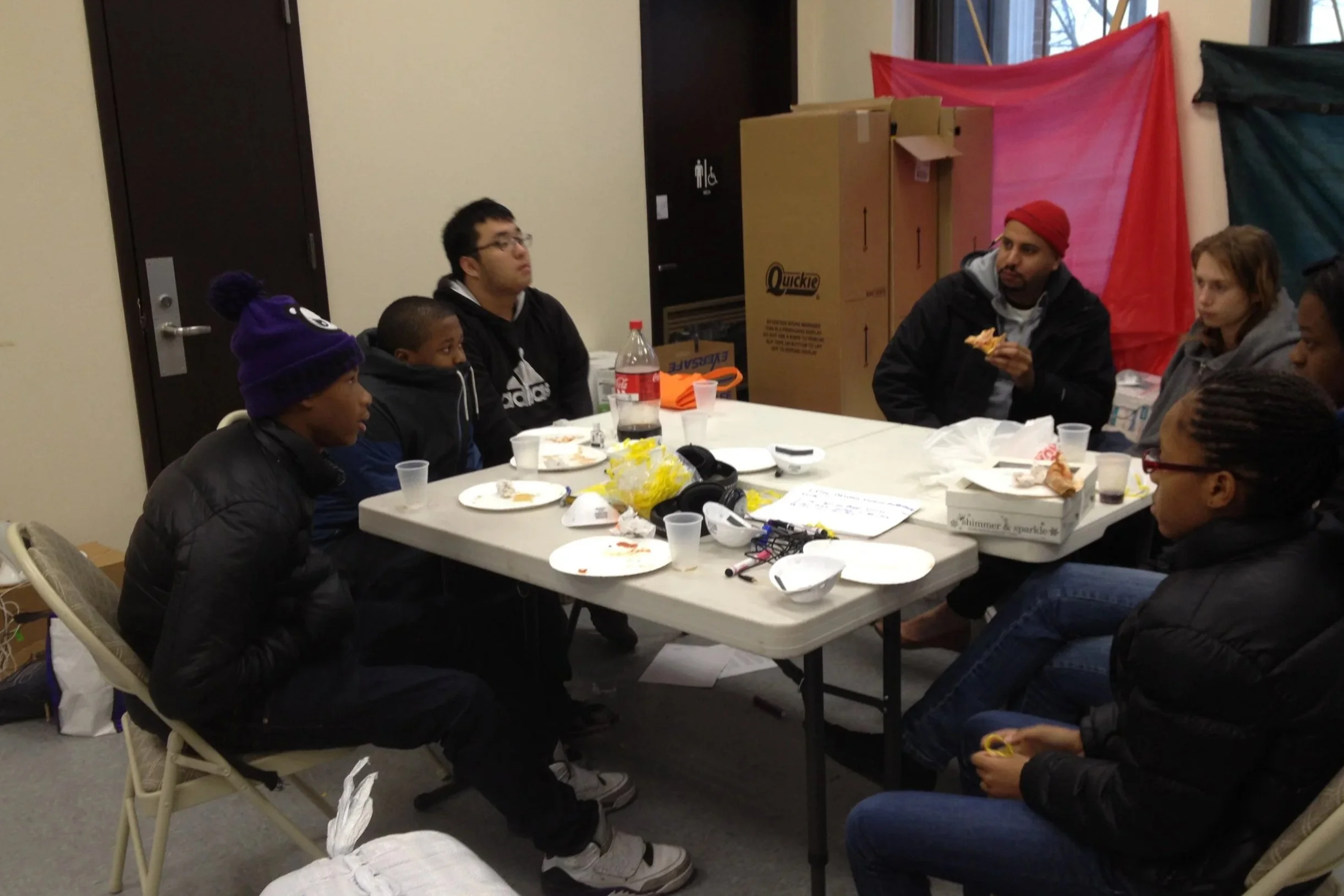
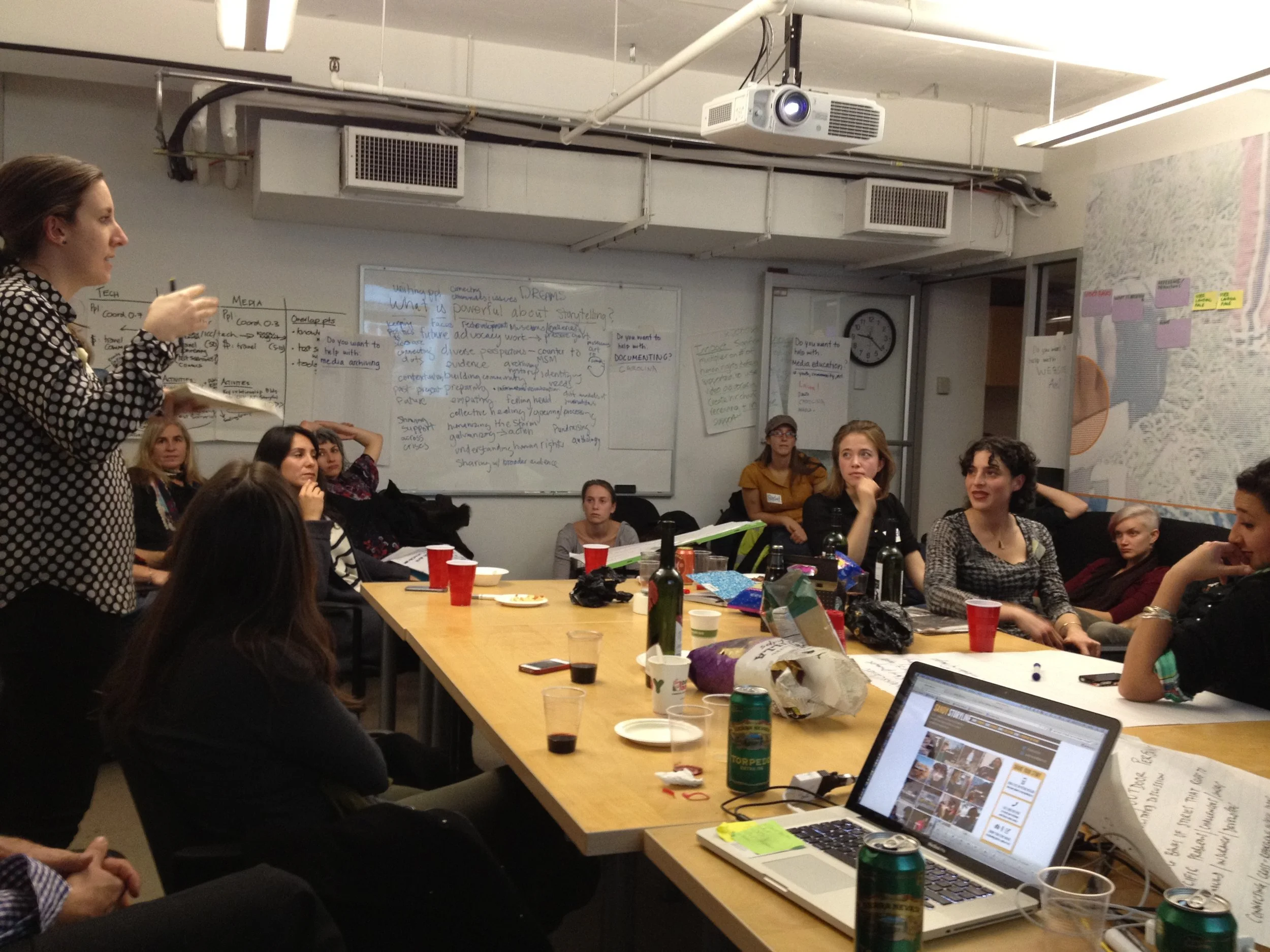
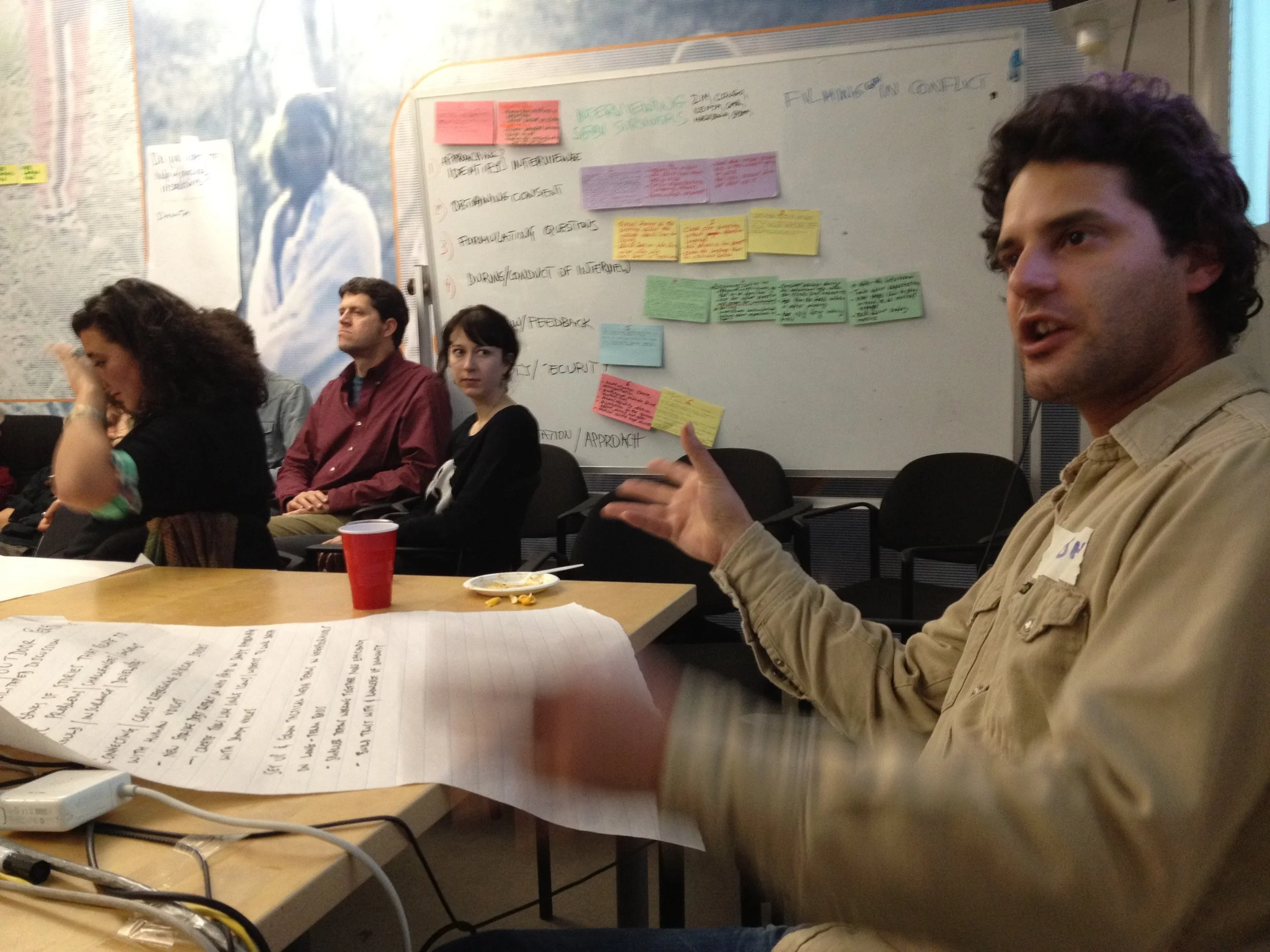
Hurricane Sandy battered the region on Sunday, October 28 into Monday the 29th. As the skies cleared, but before the water receded, the newly formed Occupy Sandy teams headed to Red Hook, Staten Island, and The Rockaways to check-in with friends and family, and set-up a network of community-led rebuilding sites. Within a day we were directing donations and resources. Almost as quickly as those sites were established Sandy Storyline started holding rotating public meetings at relief sites. We extended an open invitation to residents and volunteers interested in not only sharing their stories, but helping design and direct the process for how communities could document the impact, and communicate their needs.
We call this process a participatory documentary. Click here to See Michael Premo present Sandy Storyline's participatory model at the Creative Time Summit.
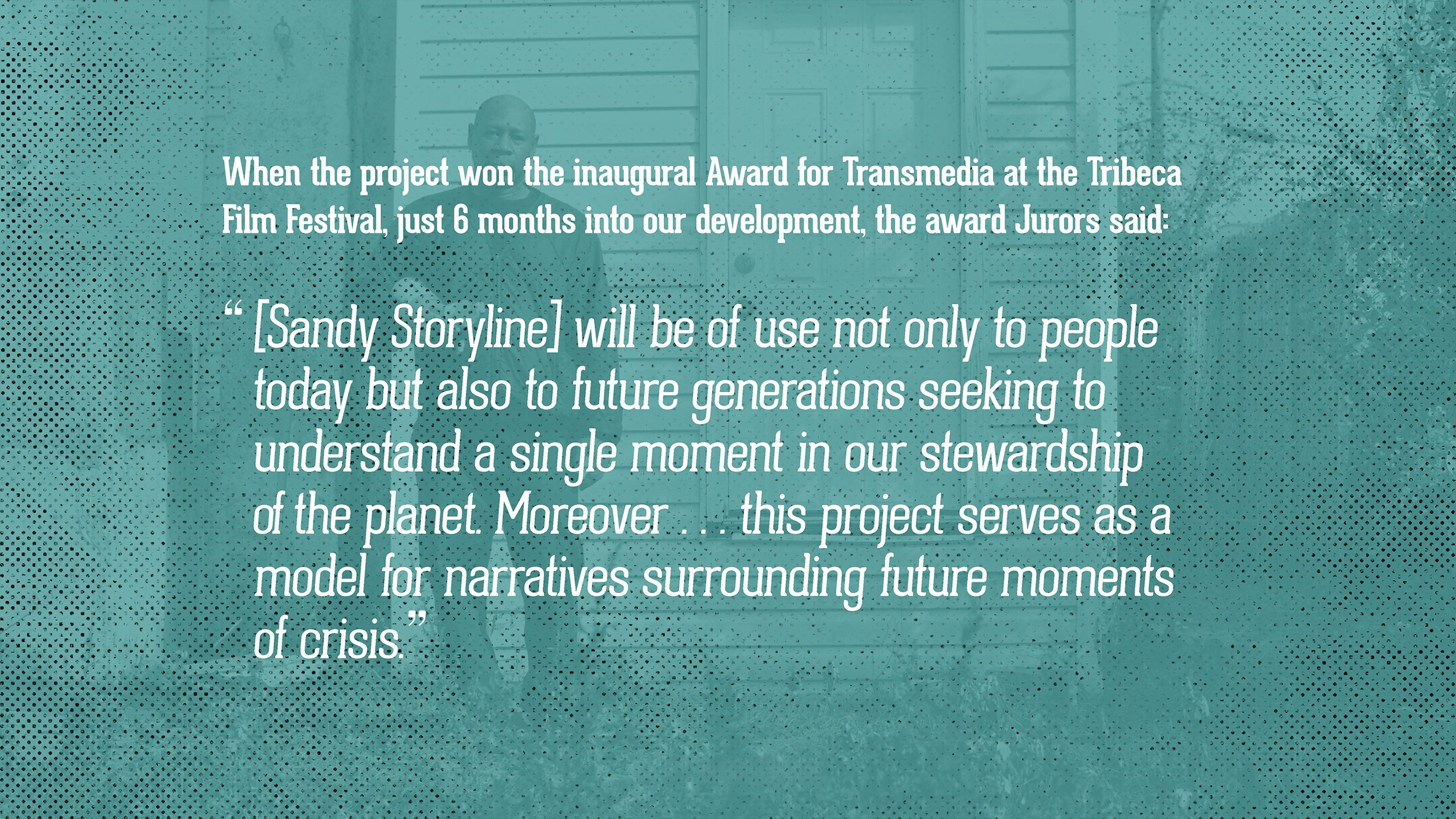
“Sandy Storyline is beautiful, powerful, democratic and visionary”
The Web Platform
It was important that we develop a way for stories to be shared quickly. It didn’t have to be as instantaneous as we’ve become accustomed to with contemporary social media. But it had to be much faster then most documentary, oral history, and even many news programs.
There was a long list of questions, including how could people submit, and in what mediums? Voice, still images, video, audio, or writing? Maybe, there was value in all of them. What submission pathways would ensure that we are reaching the many different affected demographics? Could this work in places where it was still unclear when electricity would be restored? And how could the people directly affected help co-design the process, and co-author the outcome?
As we began to work with our neighbors to create solutions, one thing became clear. Whatever we did, it would constantly shifting, and evolving. This is a process that Storyline is vary familiar with. We call it “iterating in public.” Which means that we create and release successive iterations of the creative product that the people formally known as the audience can see and react to. Most art and documentaries are created privately, sometimes even in secret, before a single, final product is released.
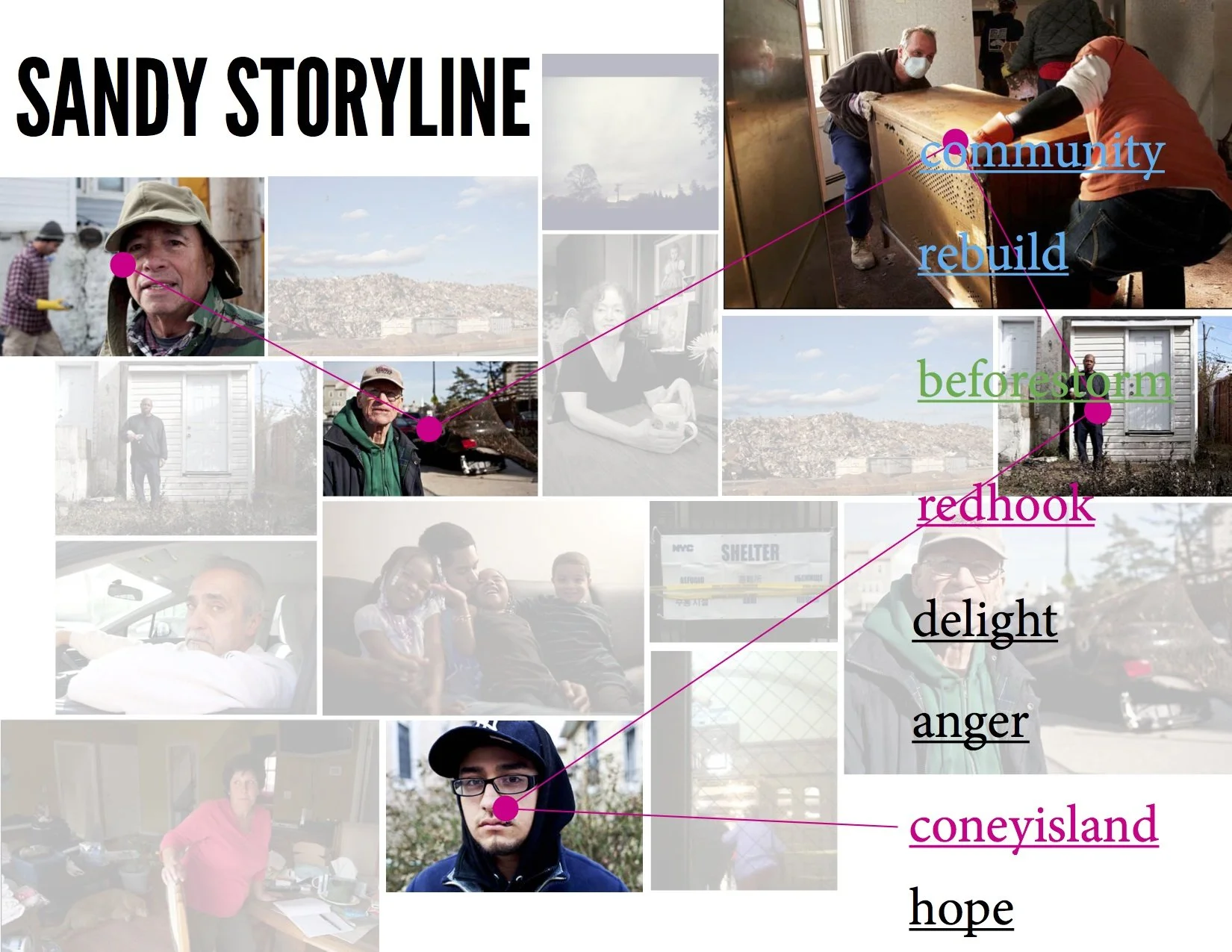
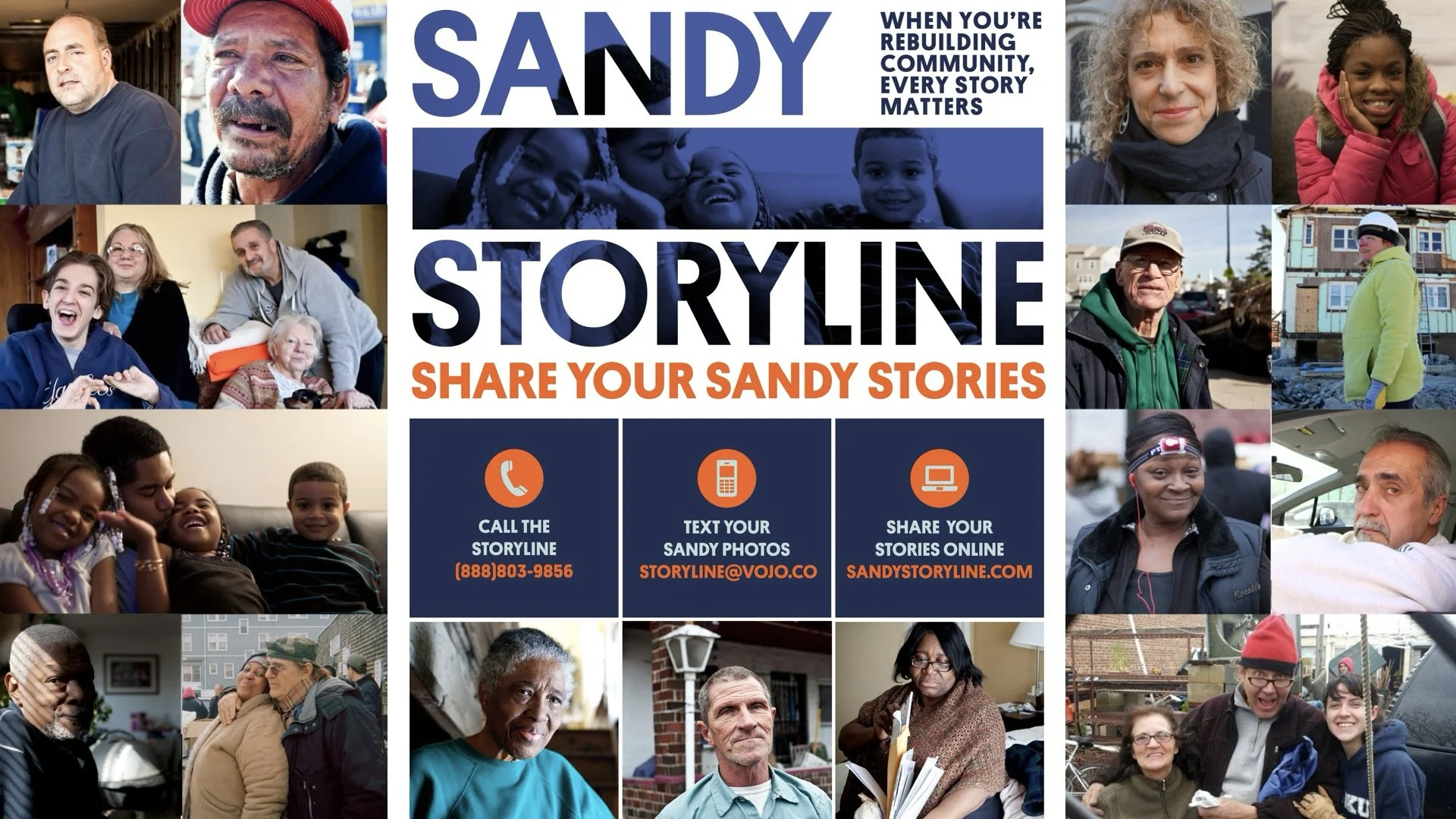
Here are some iterations of our website that we used over the first few years of the project. There is also two versions of the postcards we distributed to invite collaboration. A bare bones archive, including some of the original stories still exists at www.sandystoryline.com. Due to the cost and rapidly changing web technology we have not been able to maintain the original collection, as we would have liked.
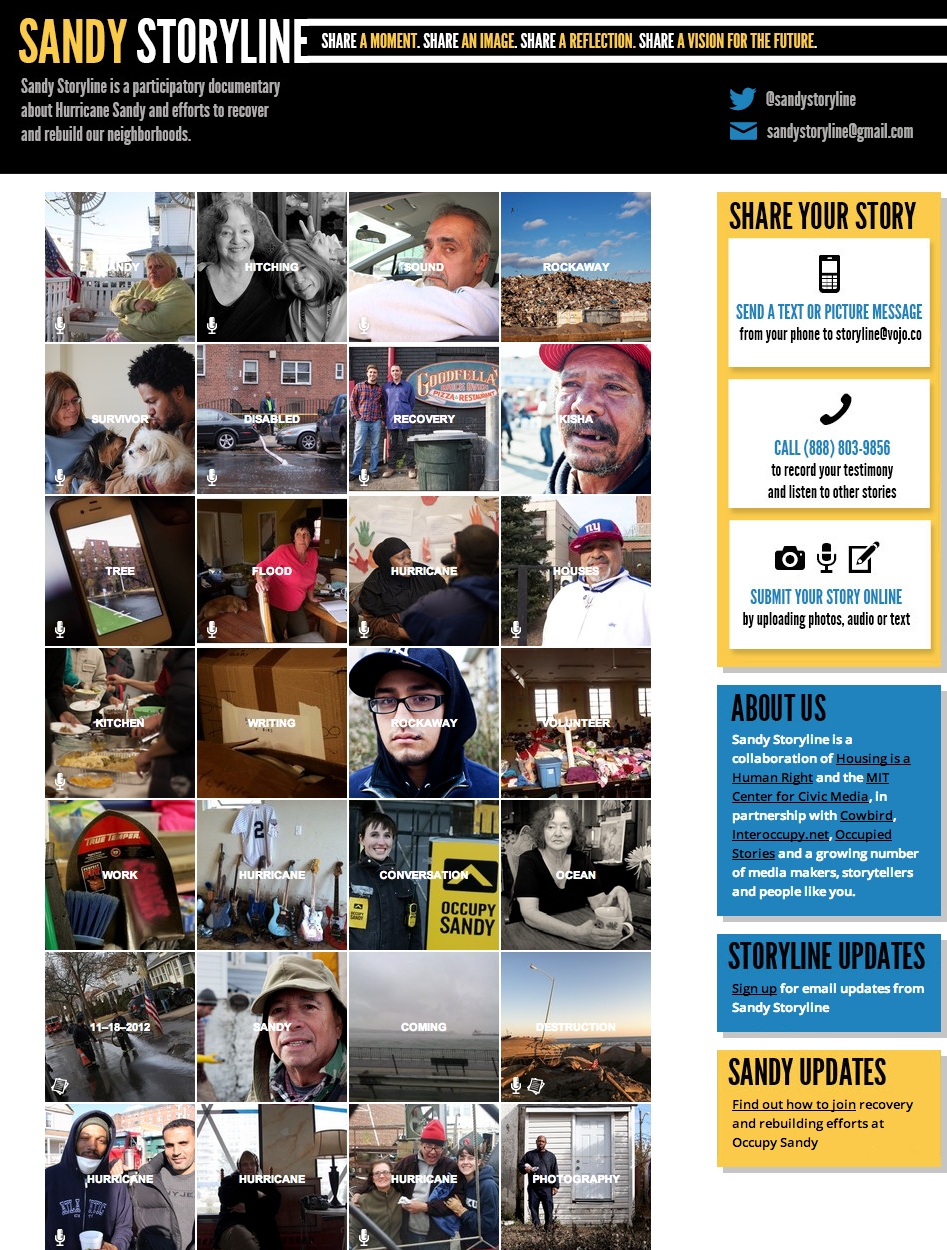
First Website Iteration with Cowbird integration.
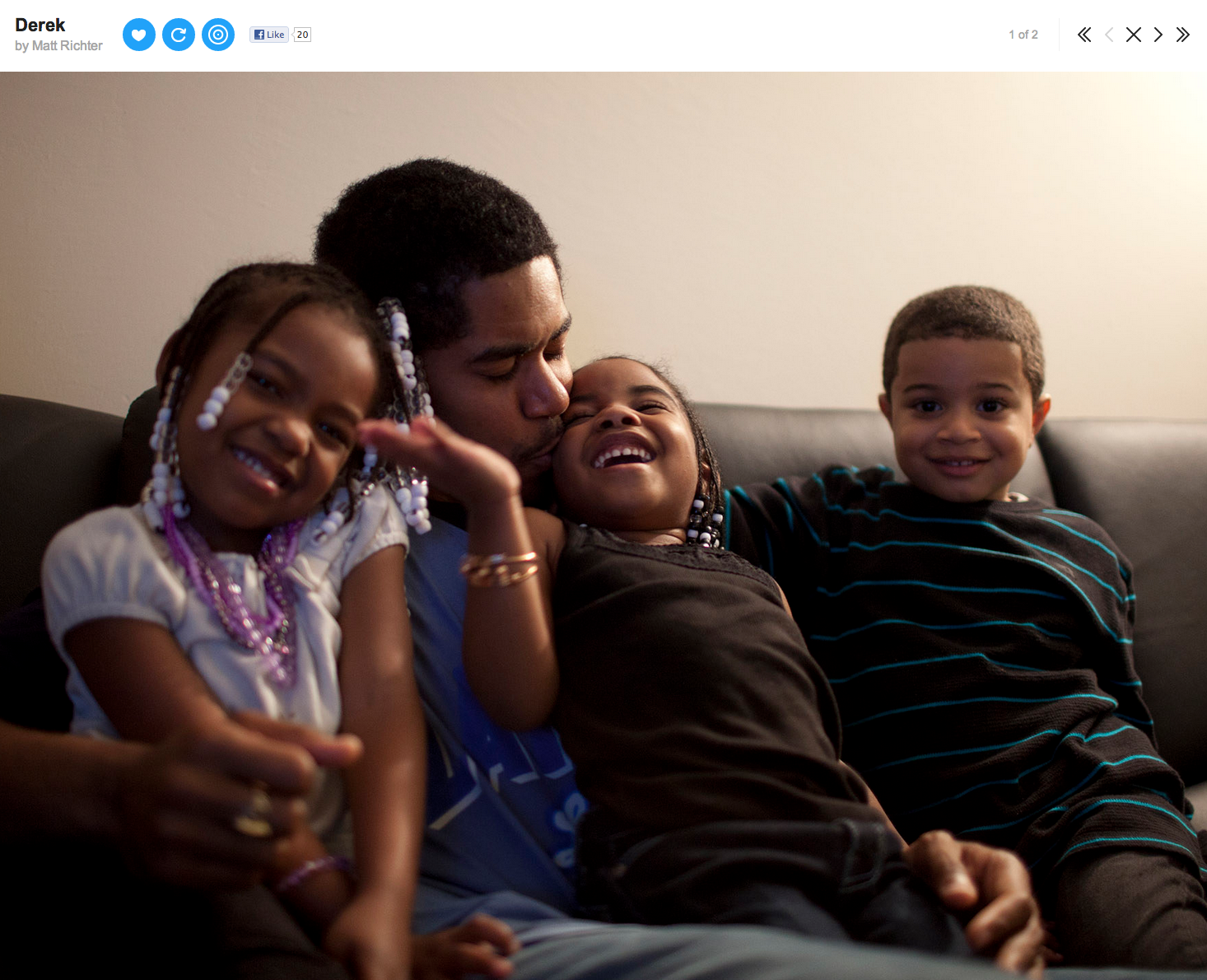
A father and four children sitting on a black sofa, with the father kissing a young girl on the cheek. The children are smiling; the girl with braids and jewelry, the boy on the right with short curly hair and a striped shirt, and two other girls smiling and relaxed.
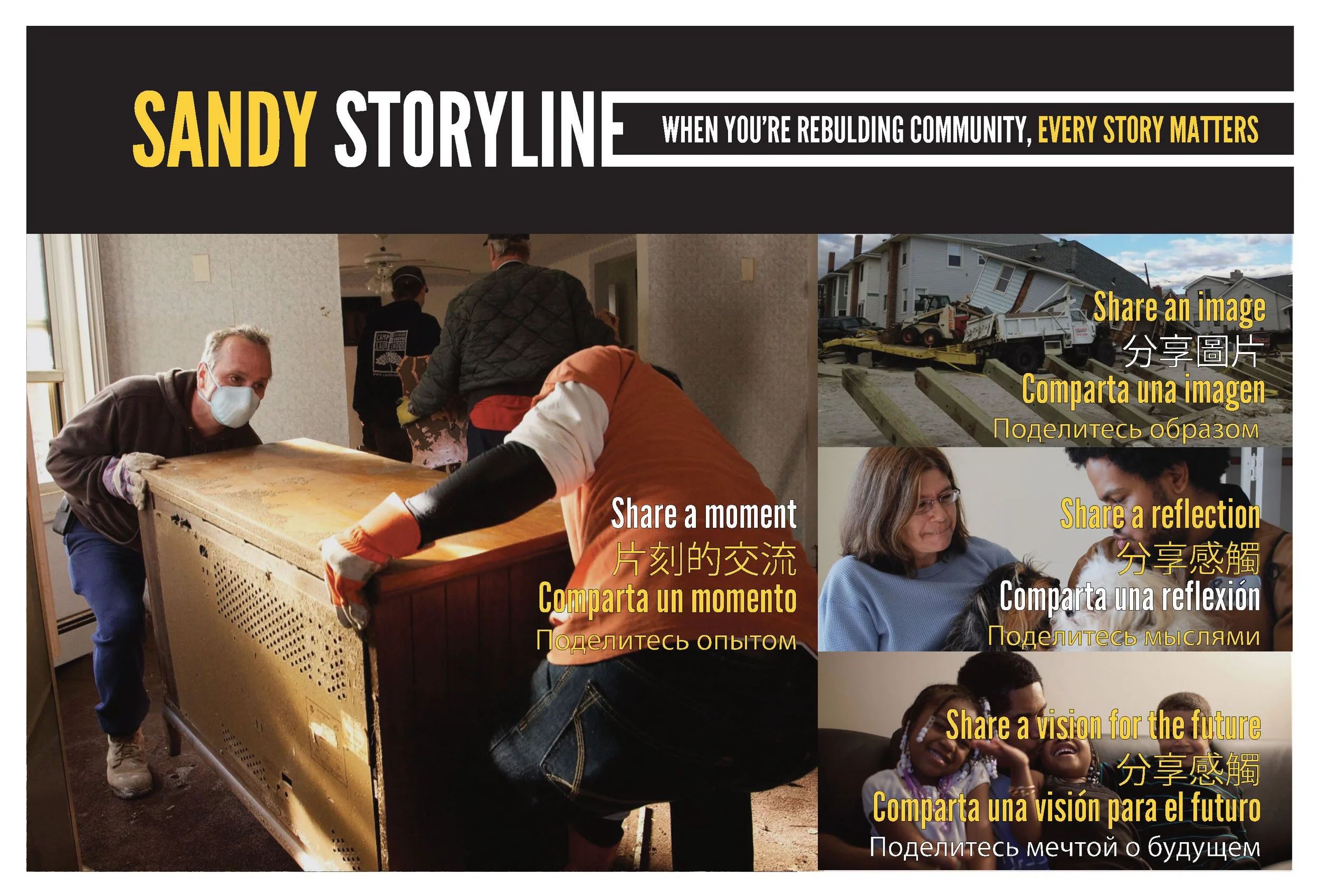
First Postcard Version - Front
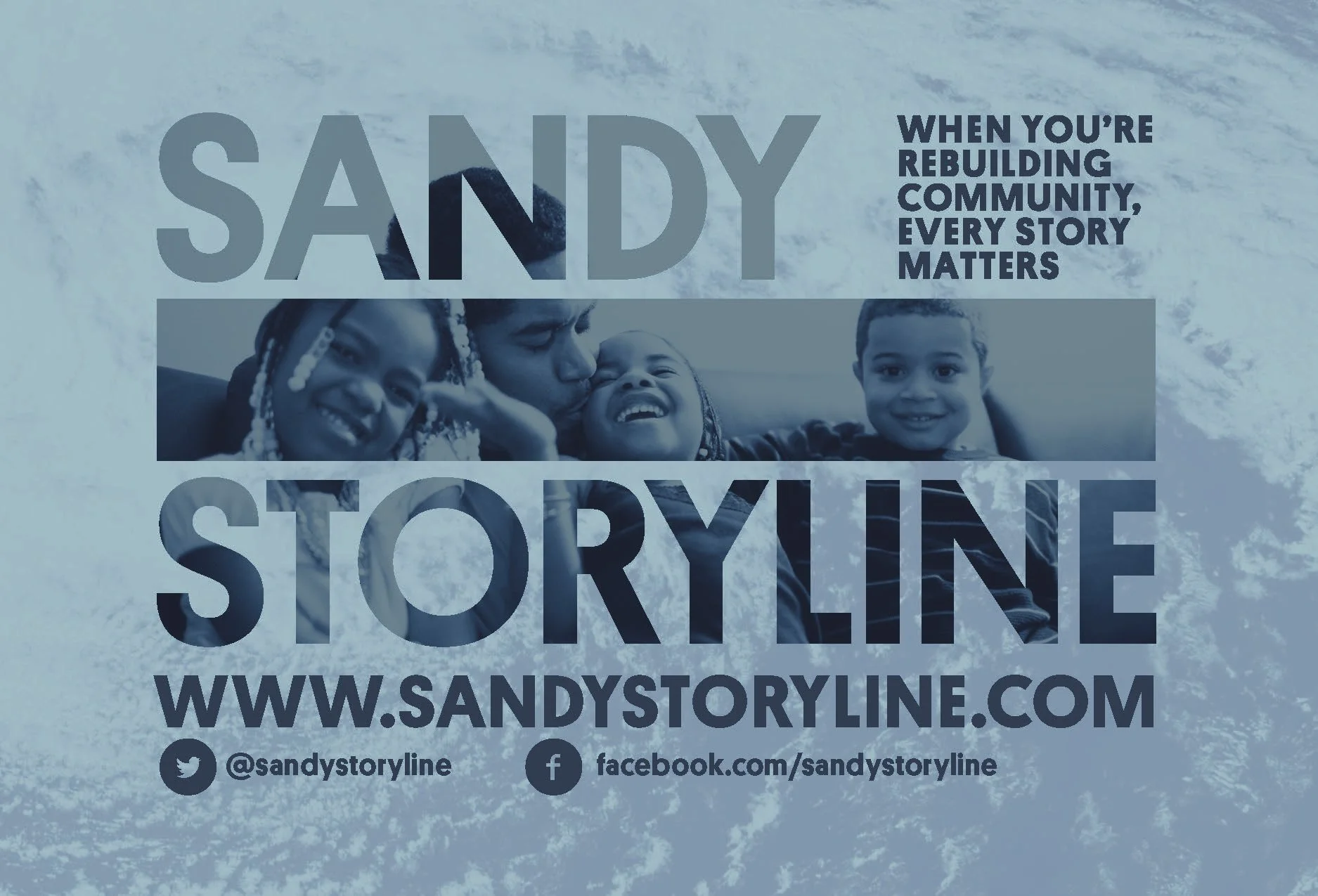
Second Postcard Version - Front
Second Postcard Version - Back
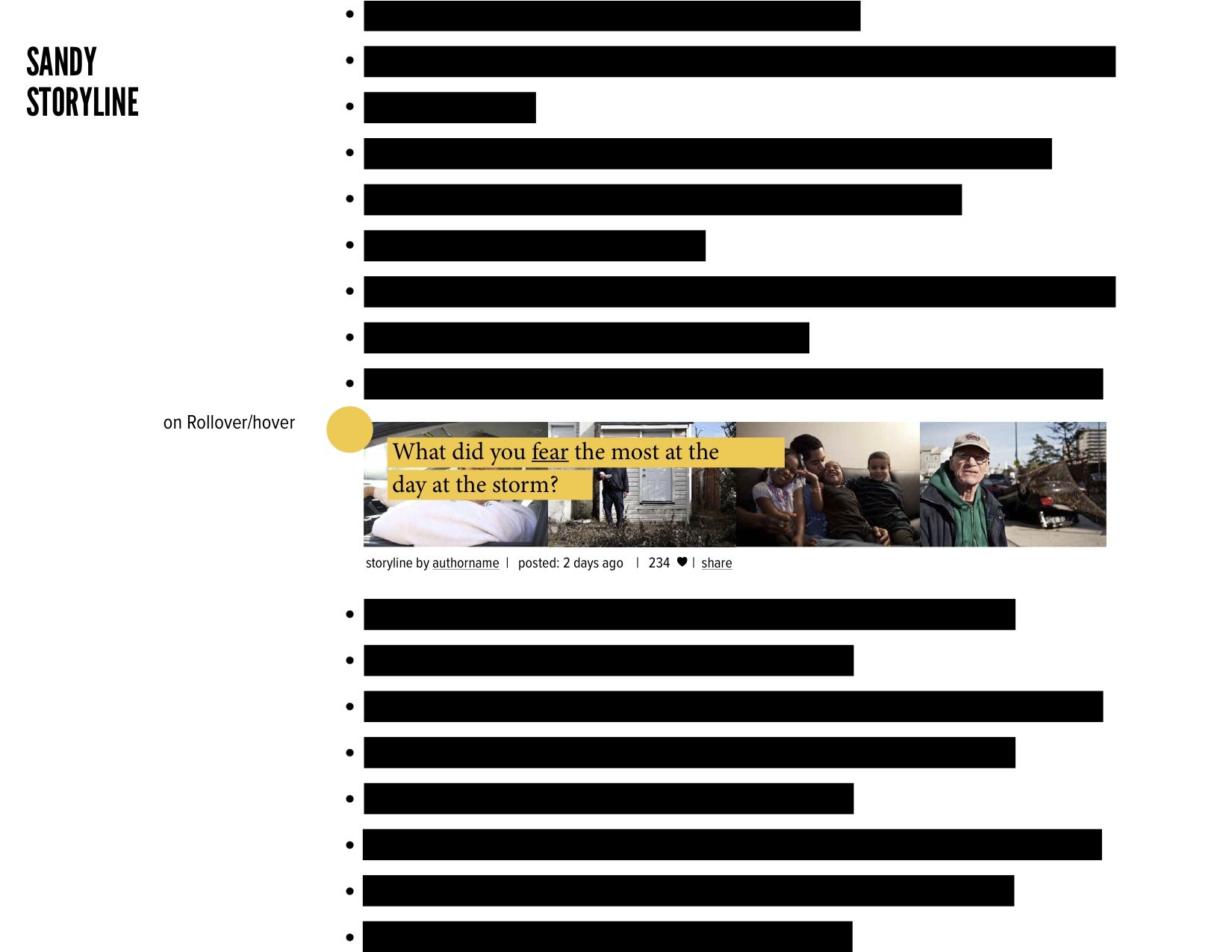
Survey results chart with star rating and categories, and a story question about fears during a storm, accompanied by a photo collage of diverse people affected by storm damage.
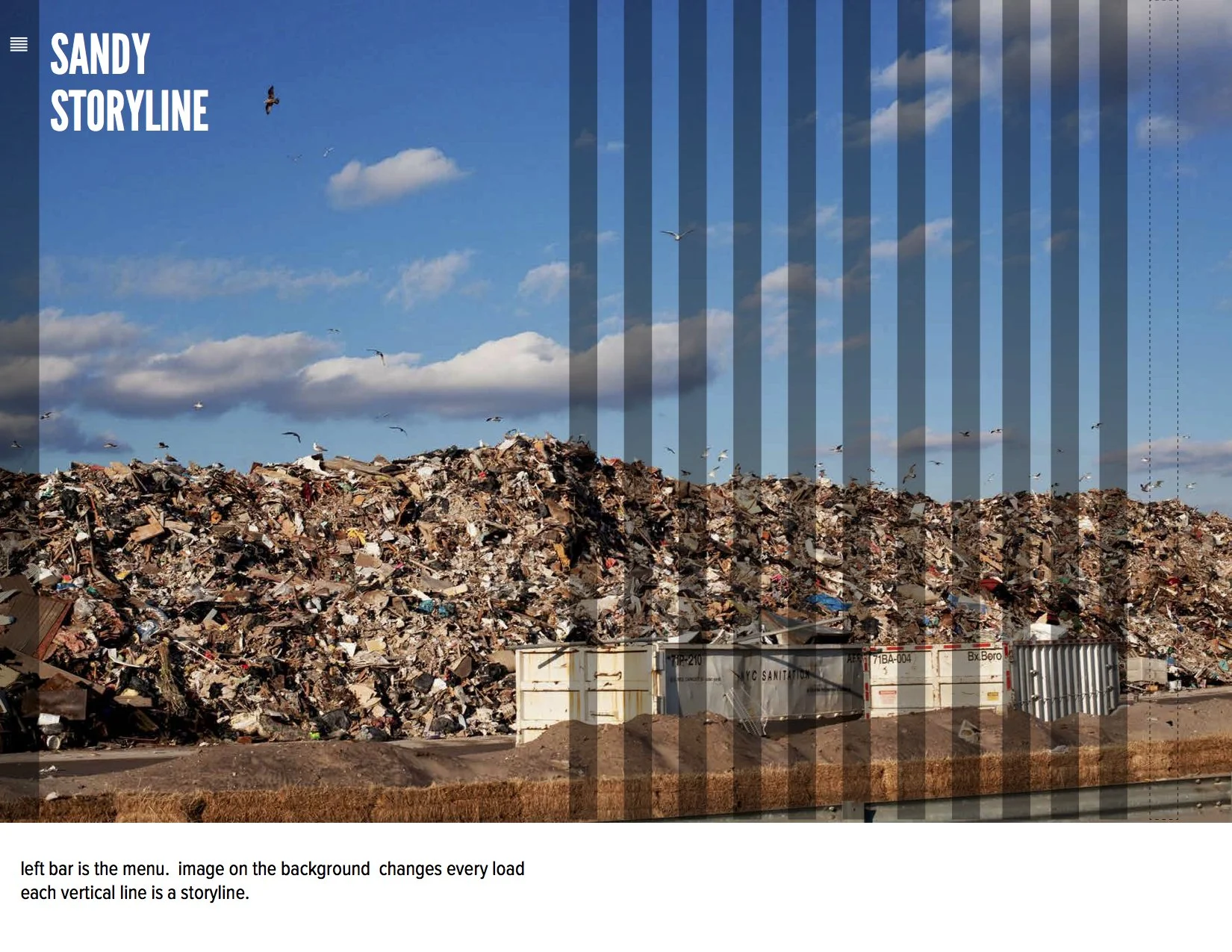
Piles of trash and garbage at a landfill with a blue sky and clouds overhead, birds flying in the sky.
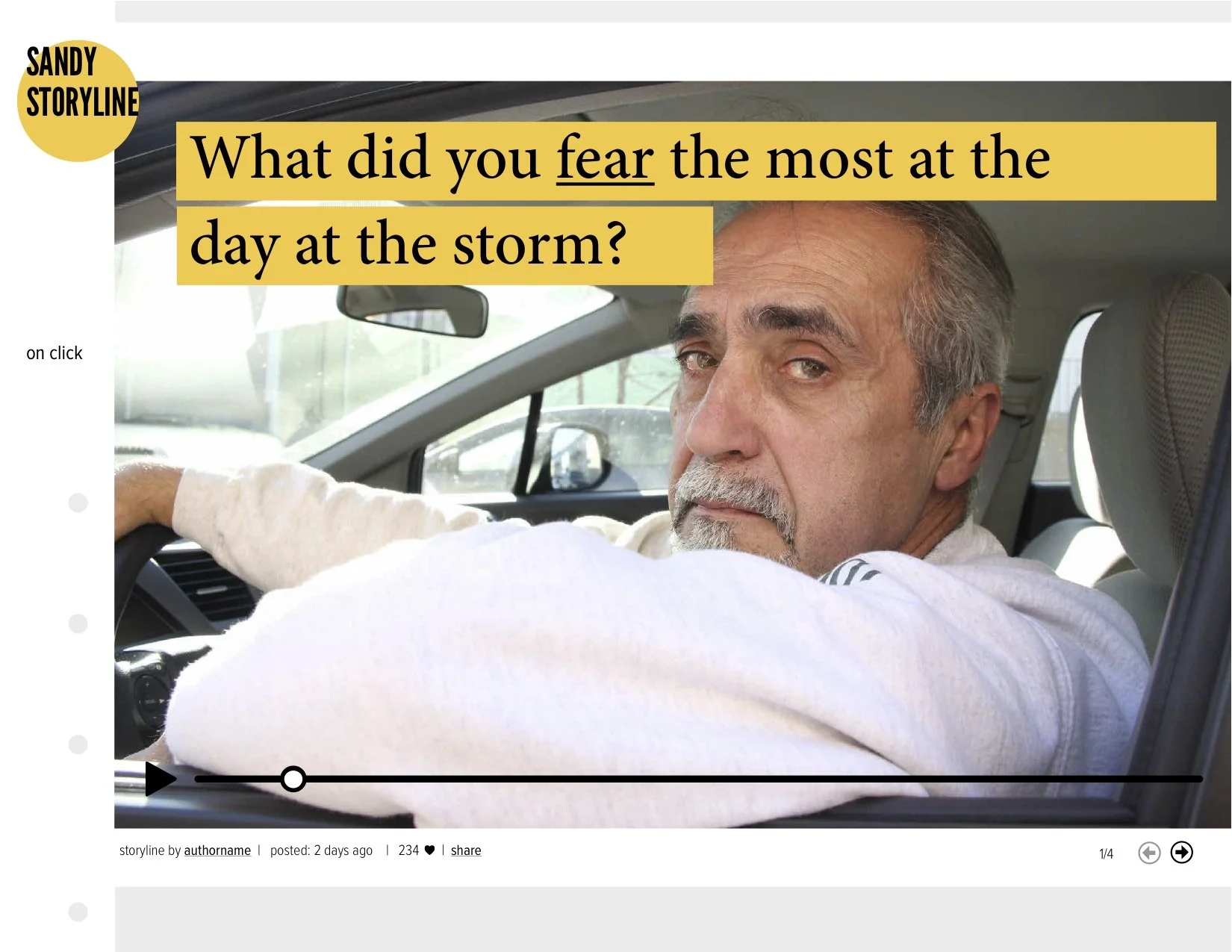
A middle-aged man with gray hair and a beard sitting in the driver's seat of a car, looking back over his shoulder with a serious expression. The car interior is visible, and the man is wearing a light-colored shirt. There is a yellow text box over the image that says, 'What did you fear the most at the day at the storm?'.
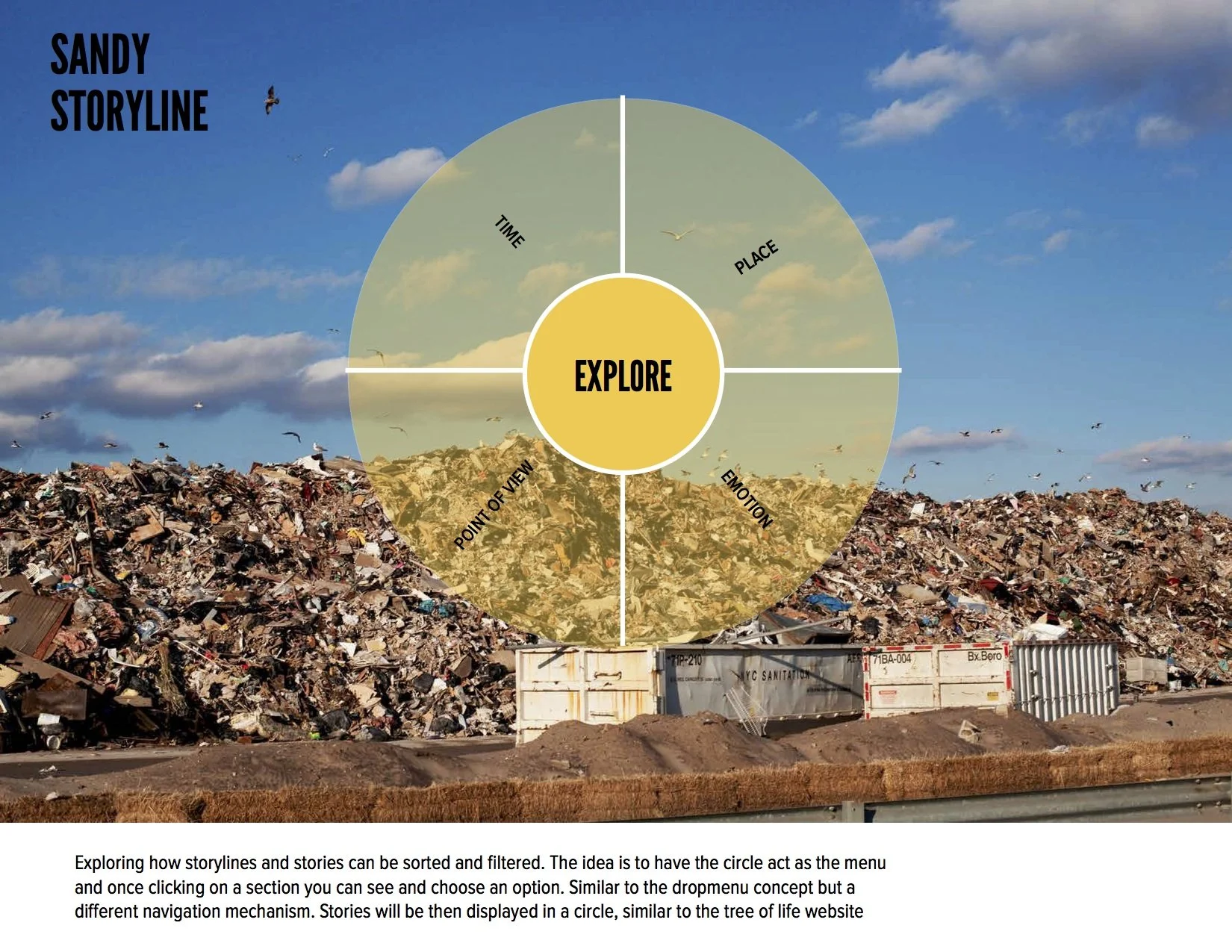
A large pile of trash and debris at a landfill site with a blue sky and scattered clouds in the background; overlaid is a circular infographic with sections labeled 'Time,' 'Place,' 'Point of View,' and 'Emotion,' with the central word 'Explore'.
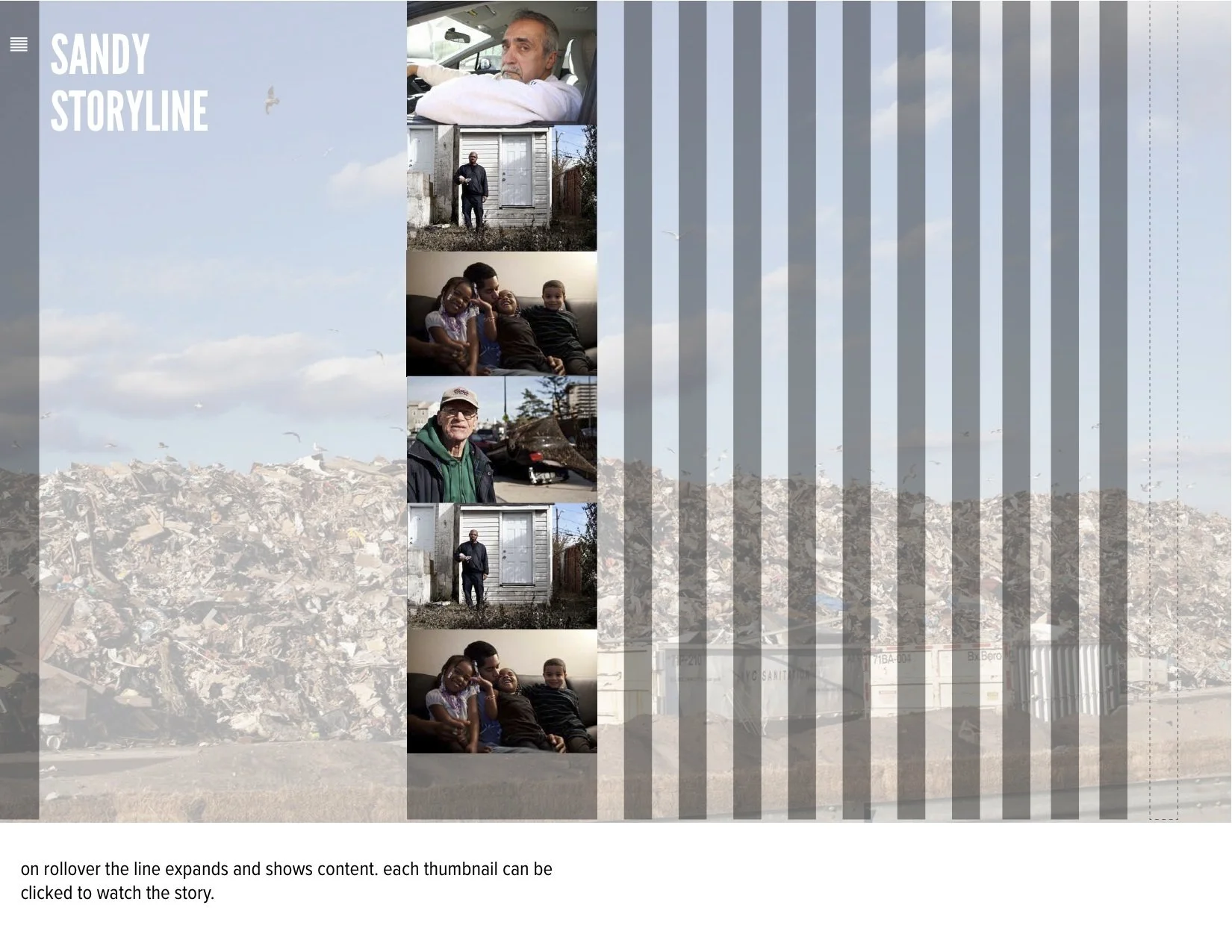
Images of people, a man in a car, a person in front of a house, children sitting together, an older man outdoors, and a man standing in front of a door. Background shows a landfill or dumpsite.
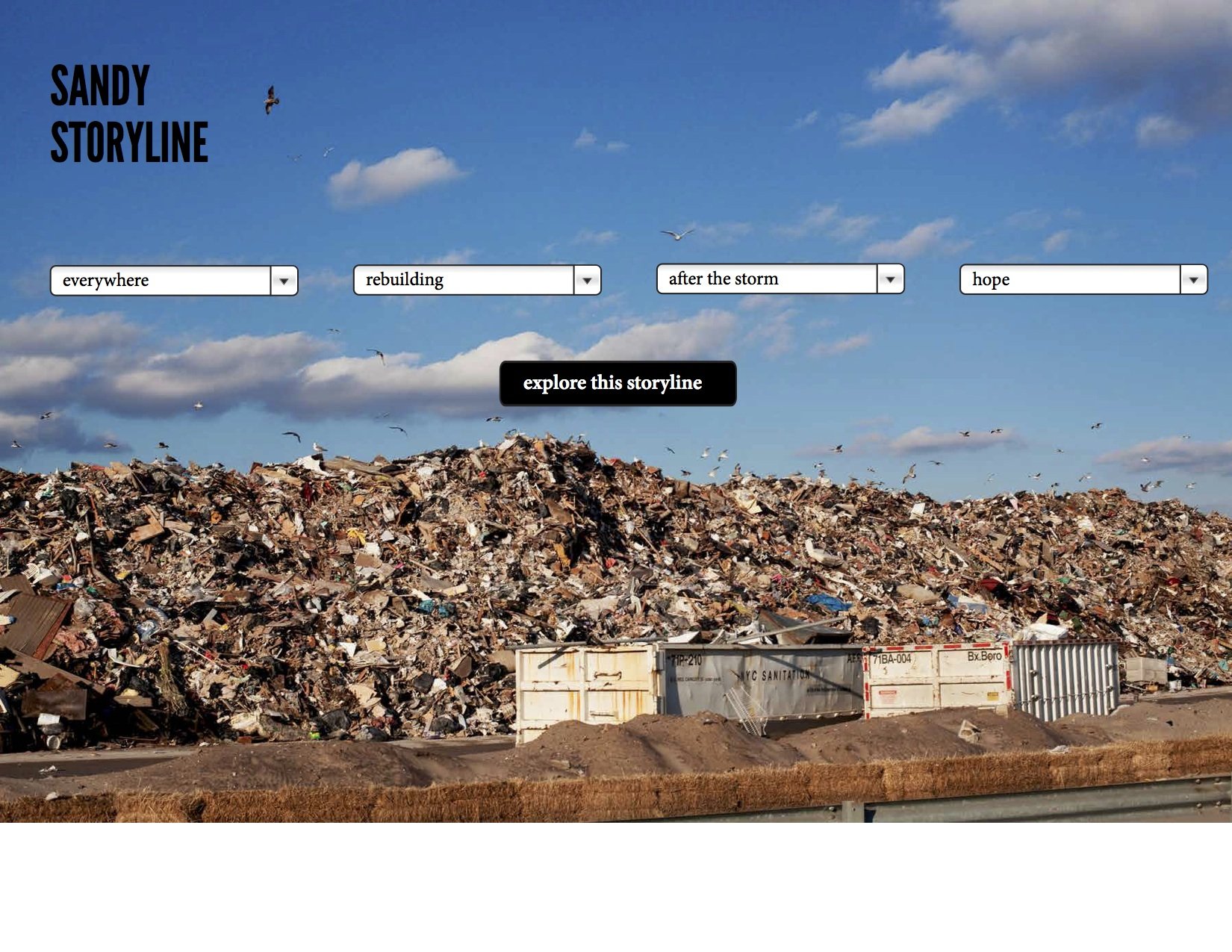
A large landfill filled with trash under a blue sky with clouds, with black seagulls flying overhead.
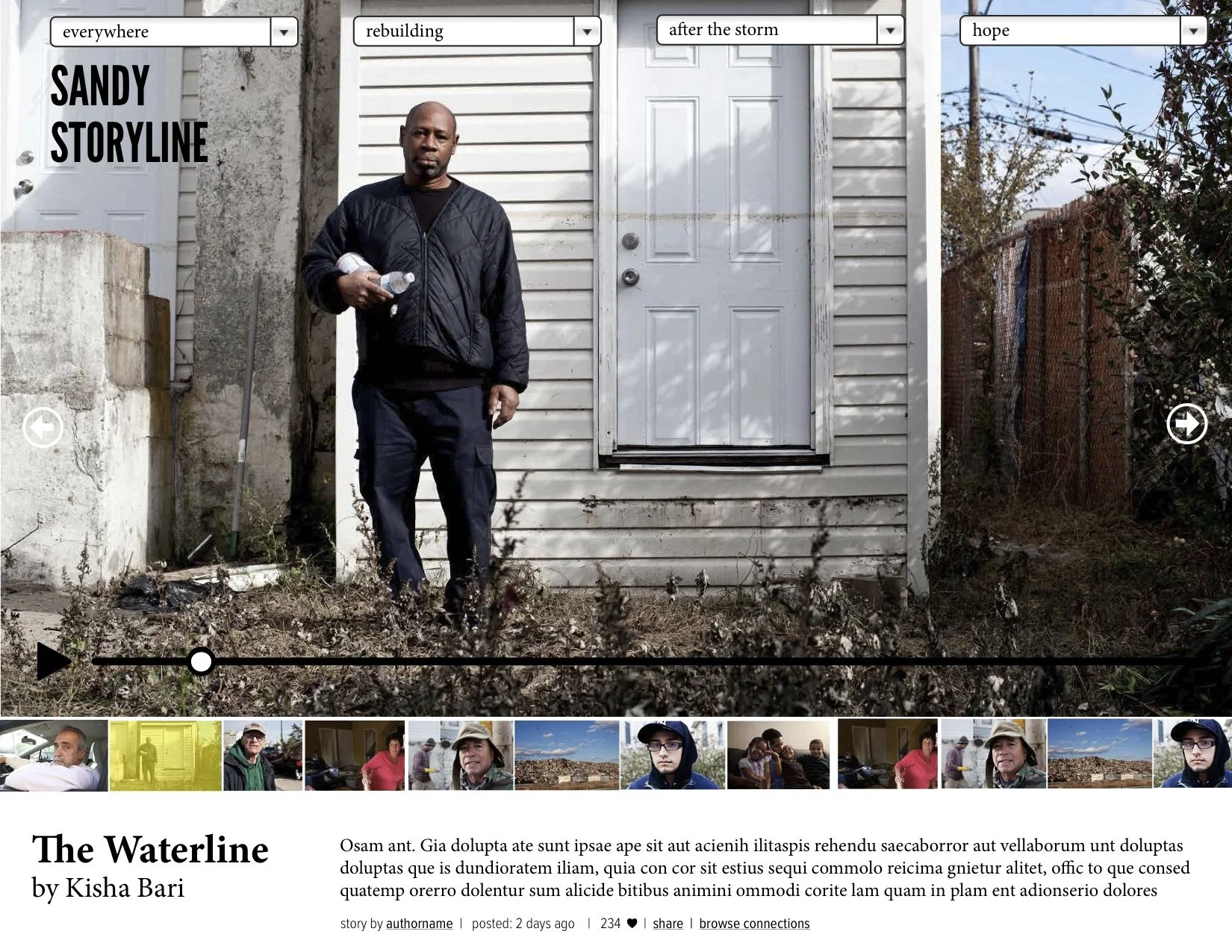
A man standing outside a house holding a water bottle. The house has white siding and a white door. The yard appears overgrown and dry. There is a concrete and brick structure on the left side of the image.
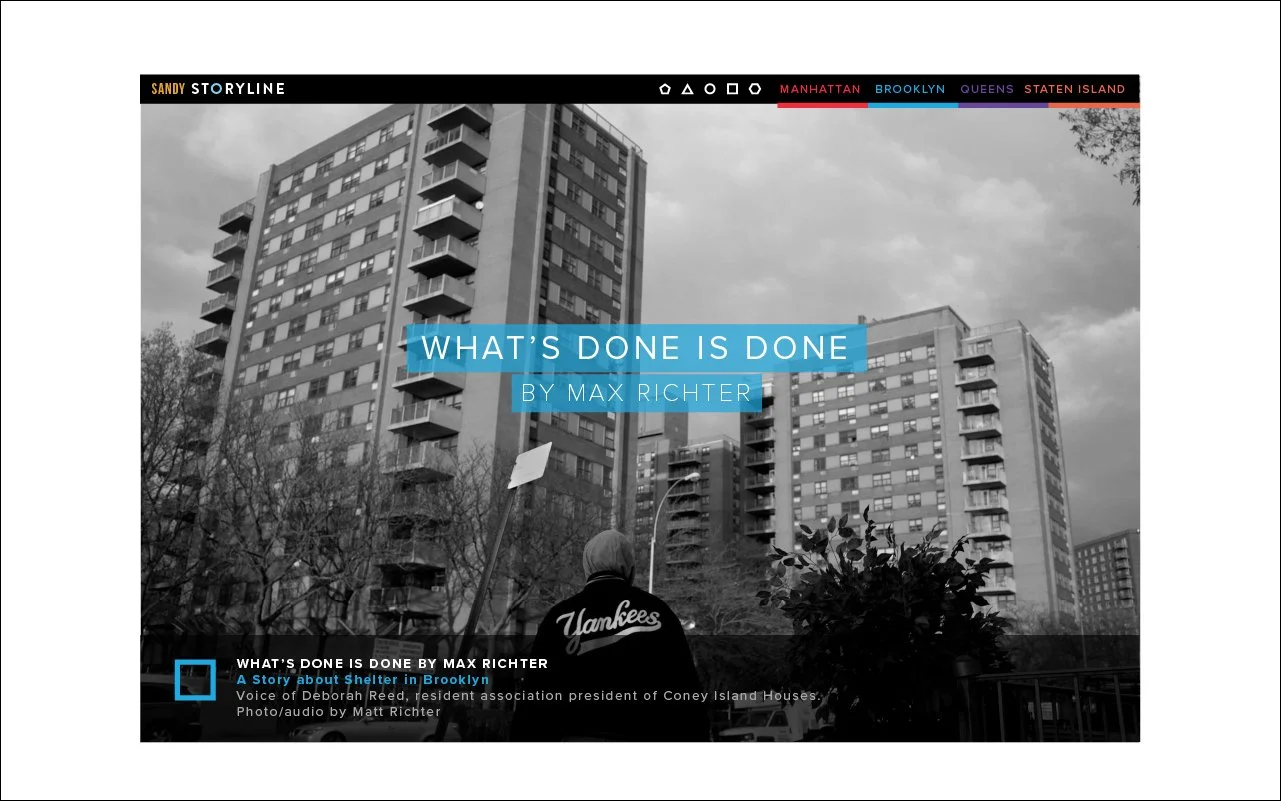
Sketch by Sougwen Chung
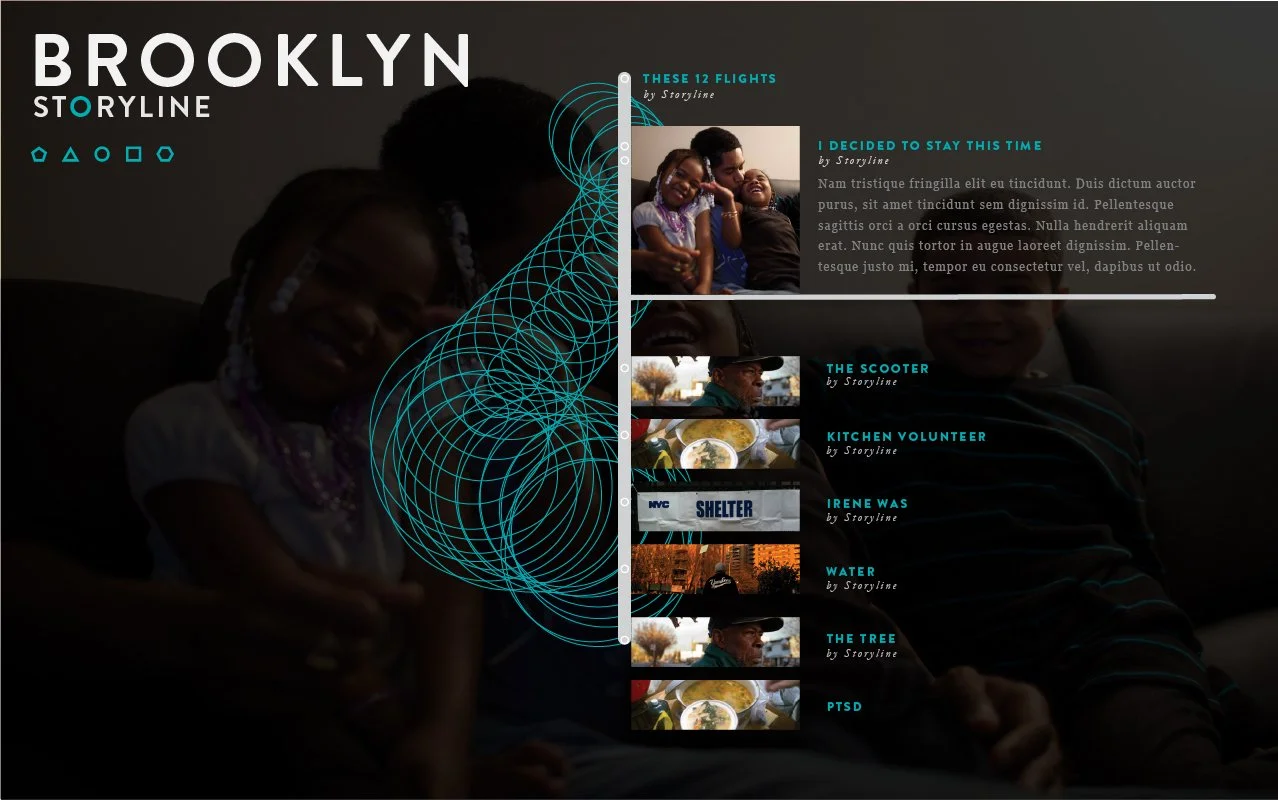
Sketch by Sougwen Chung
Exhibits
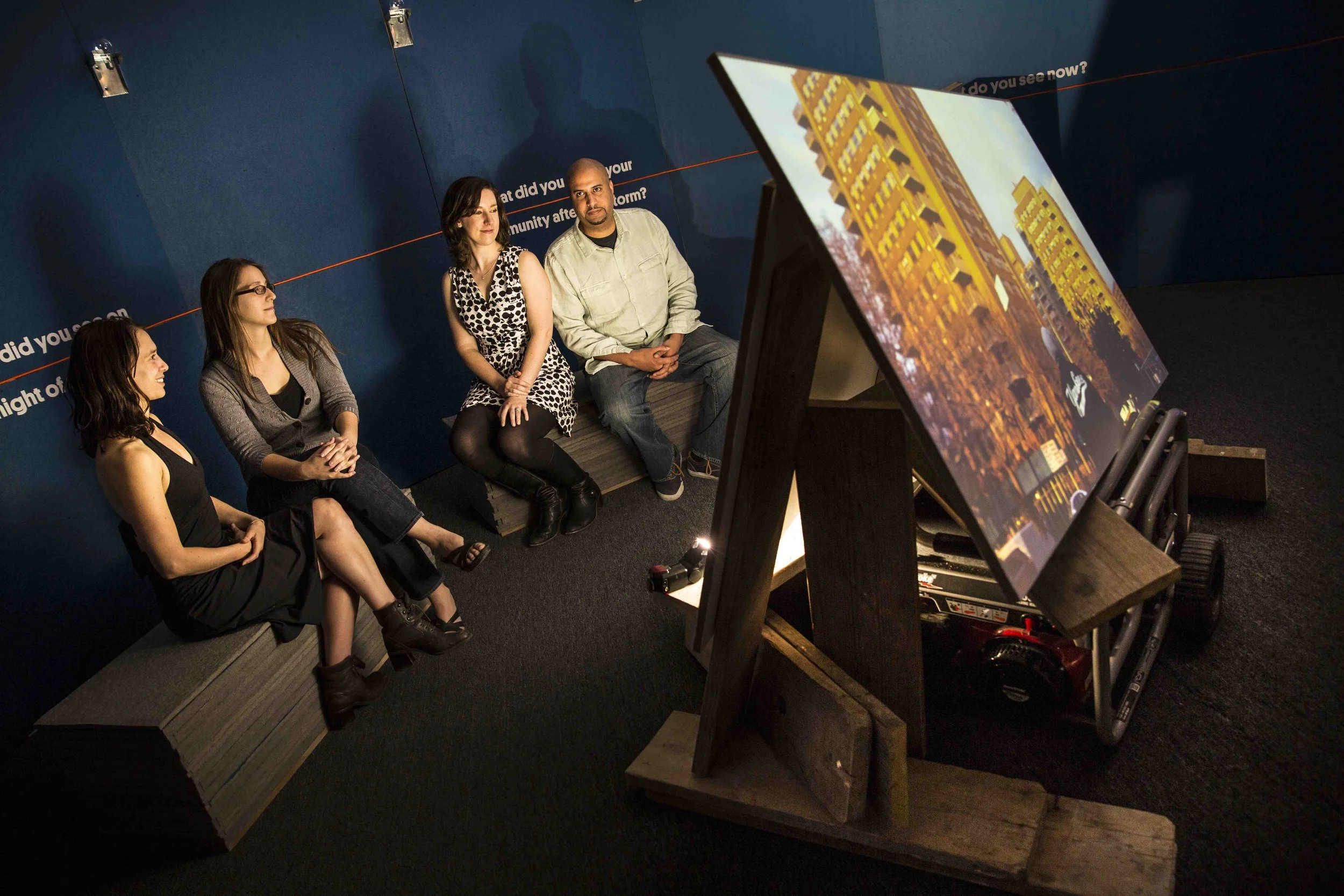
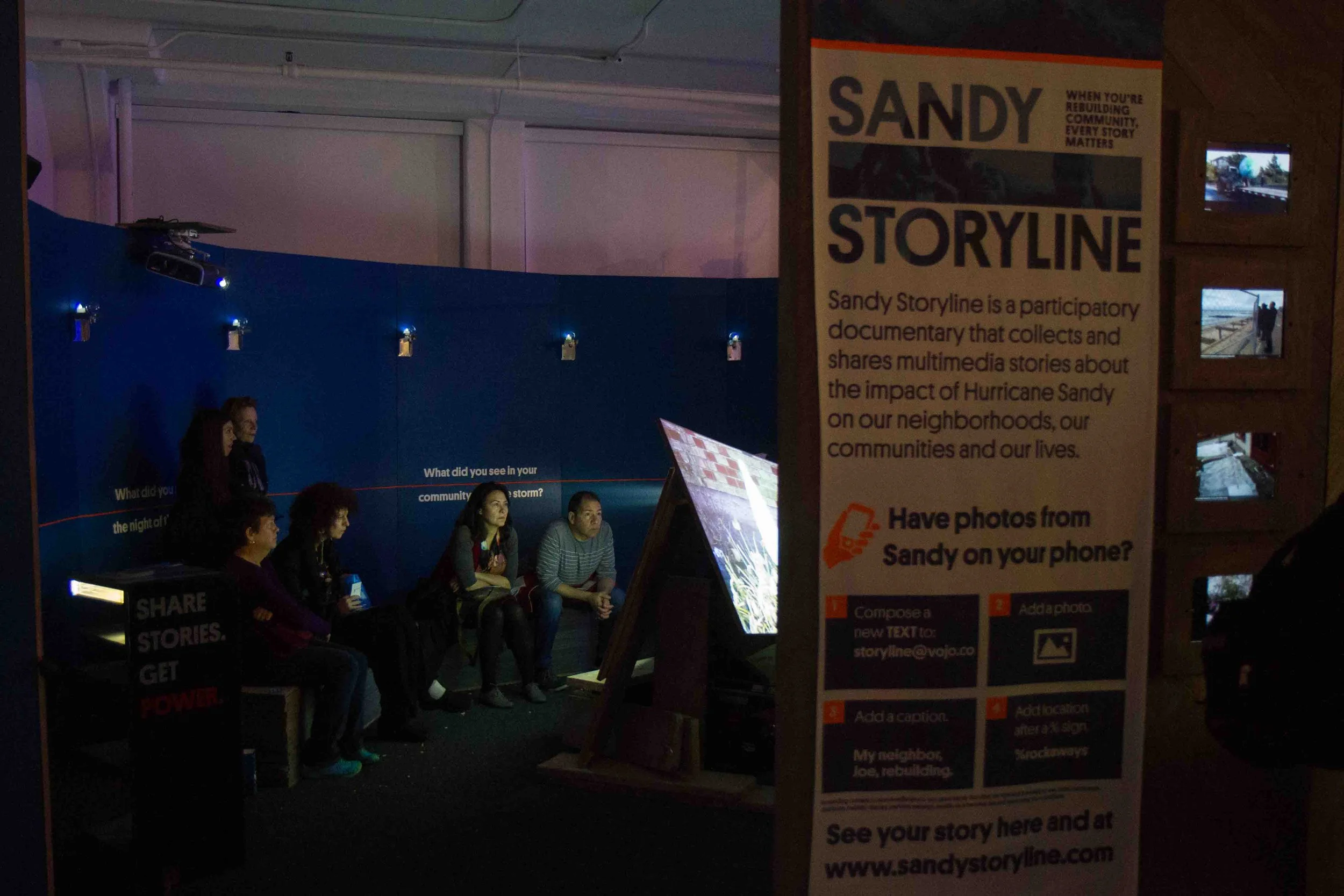
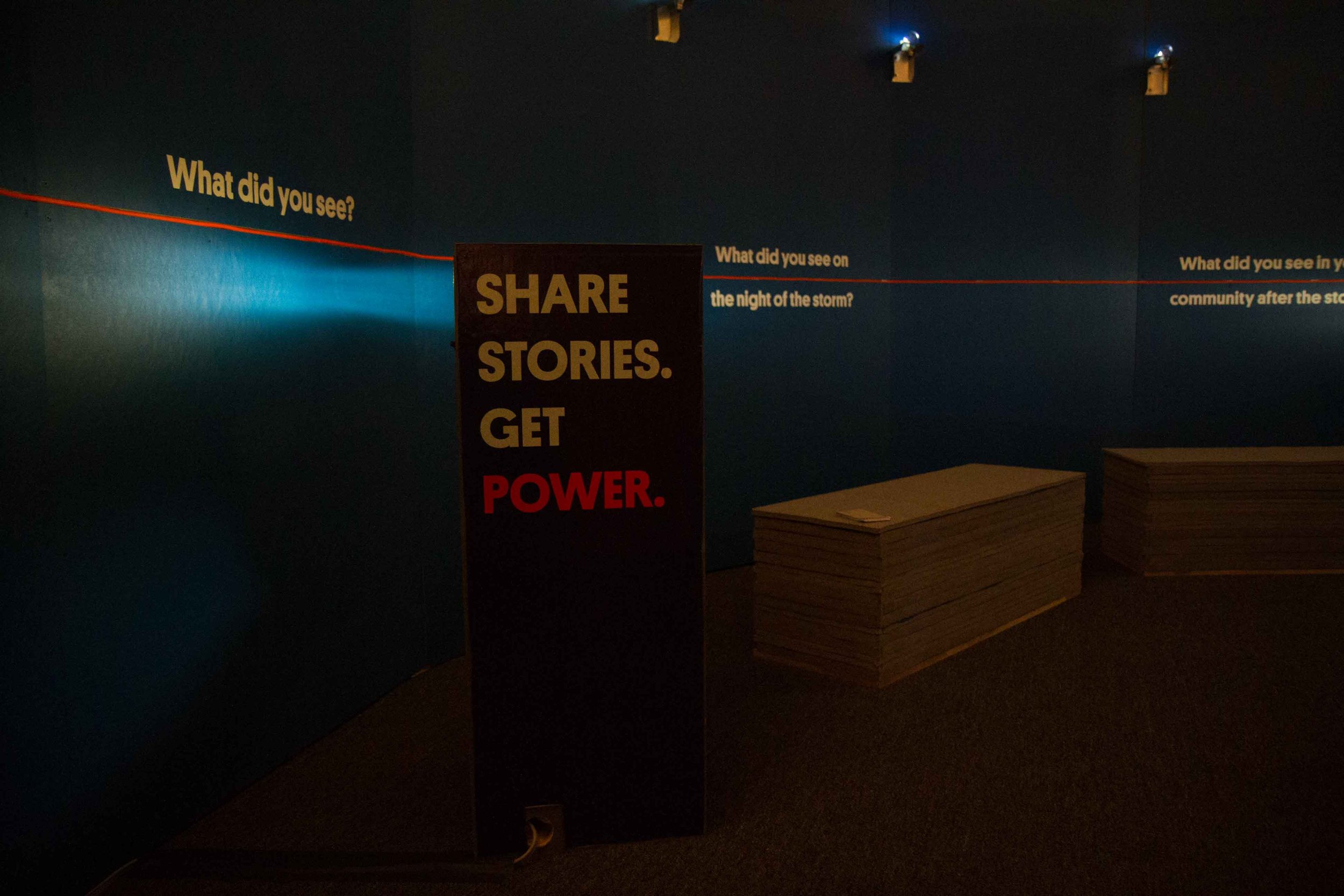
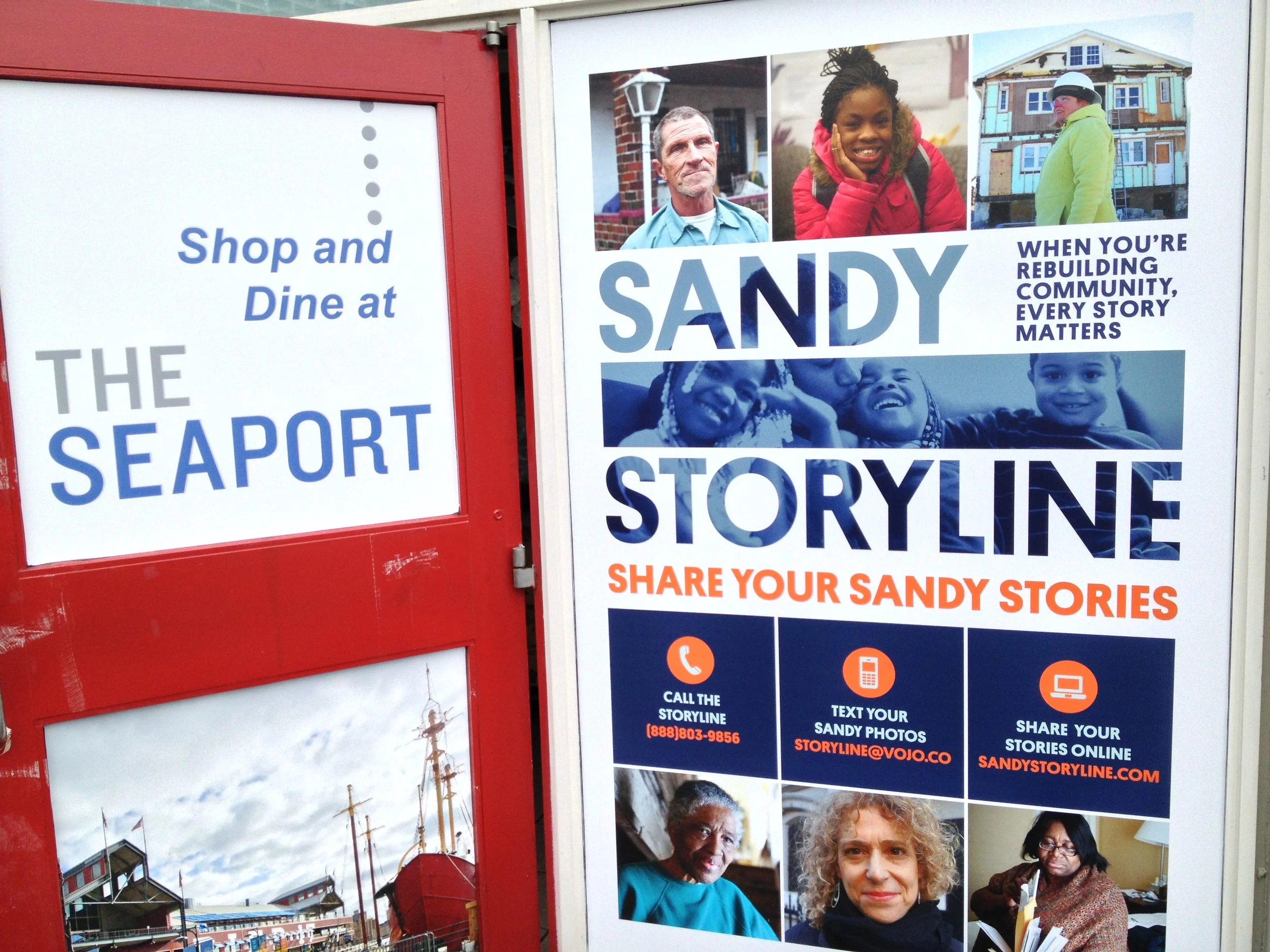
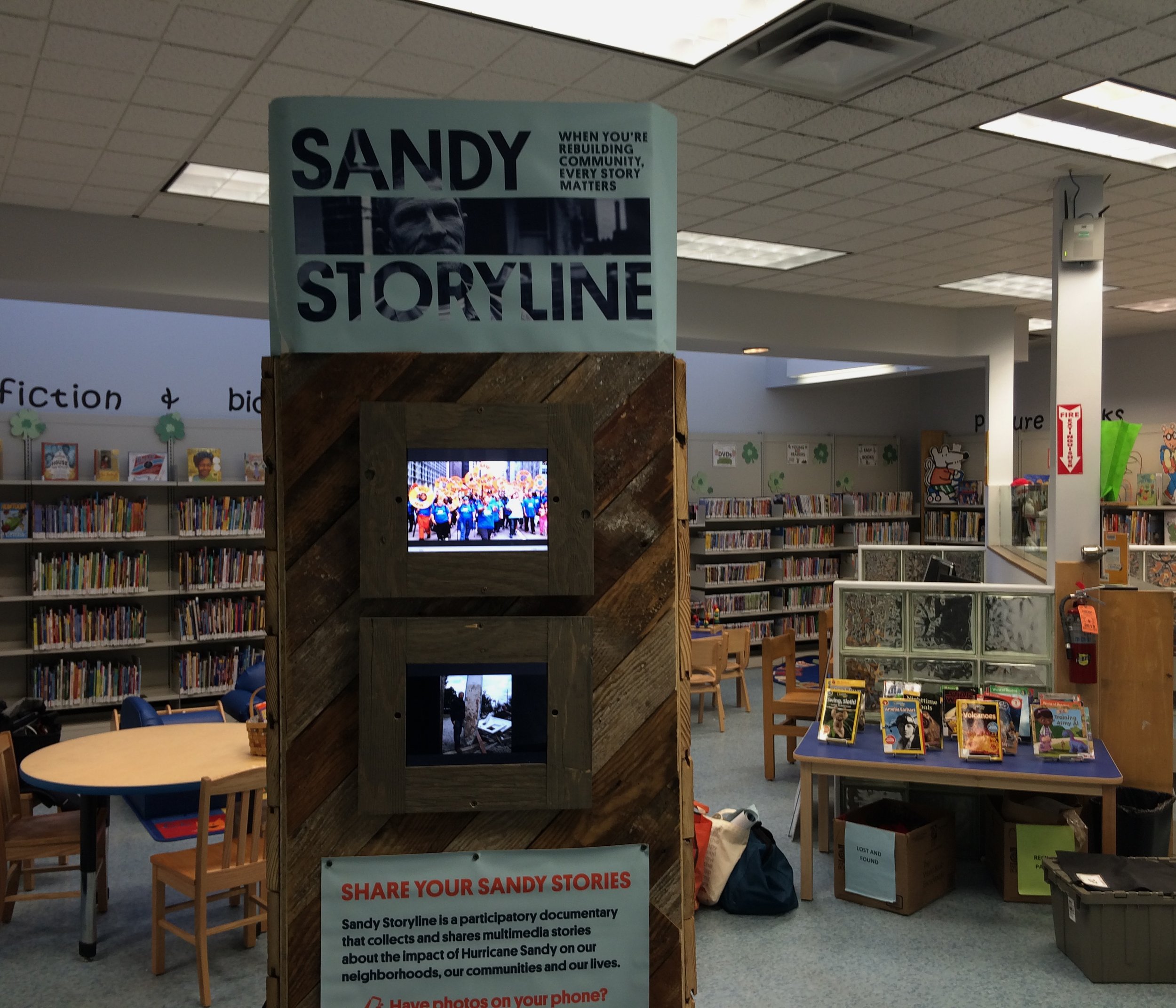
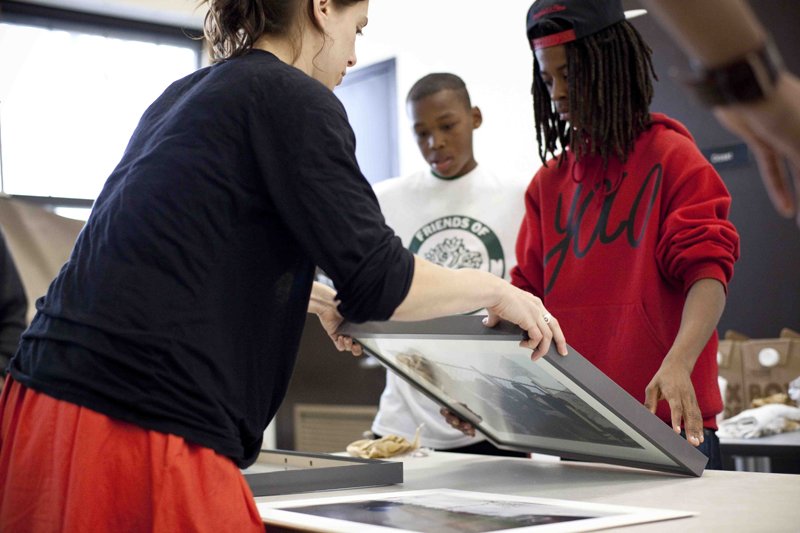
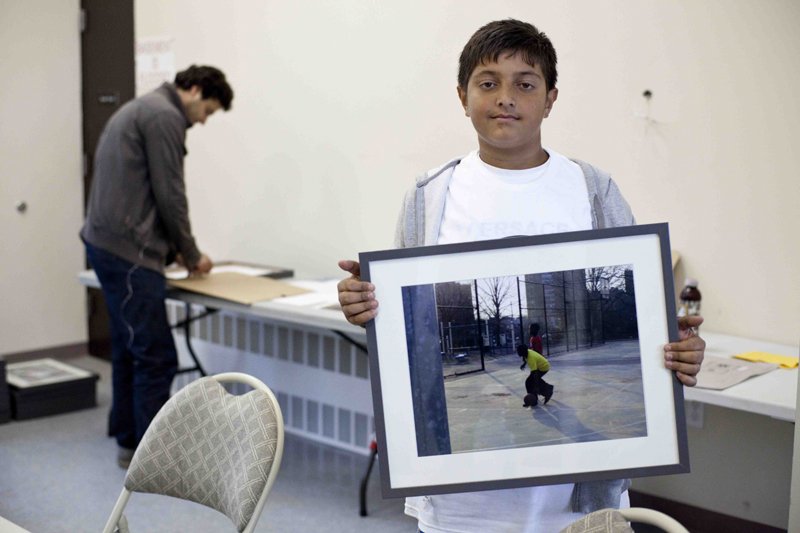
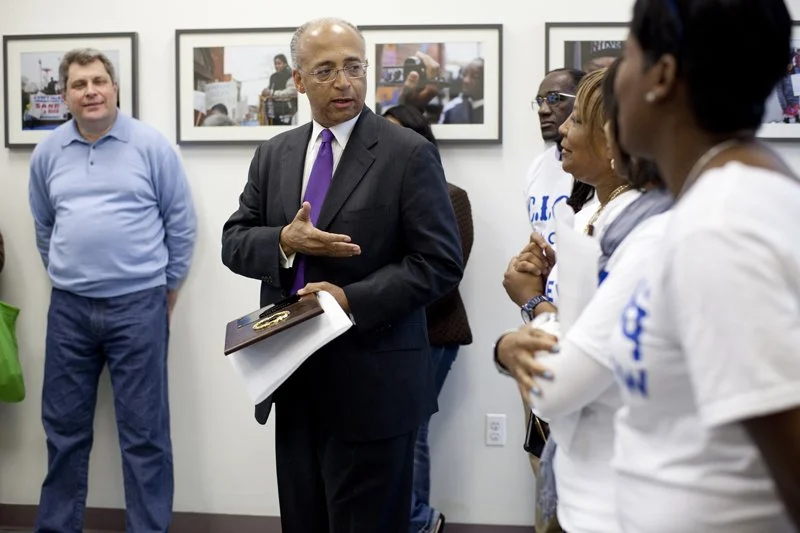
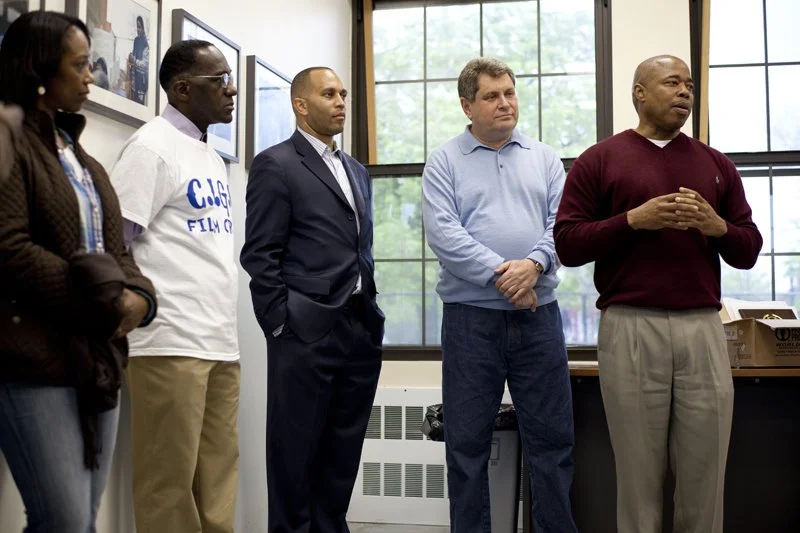
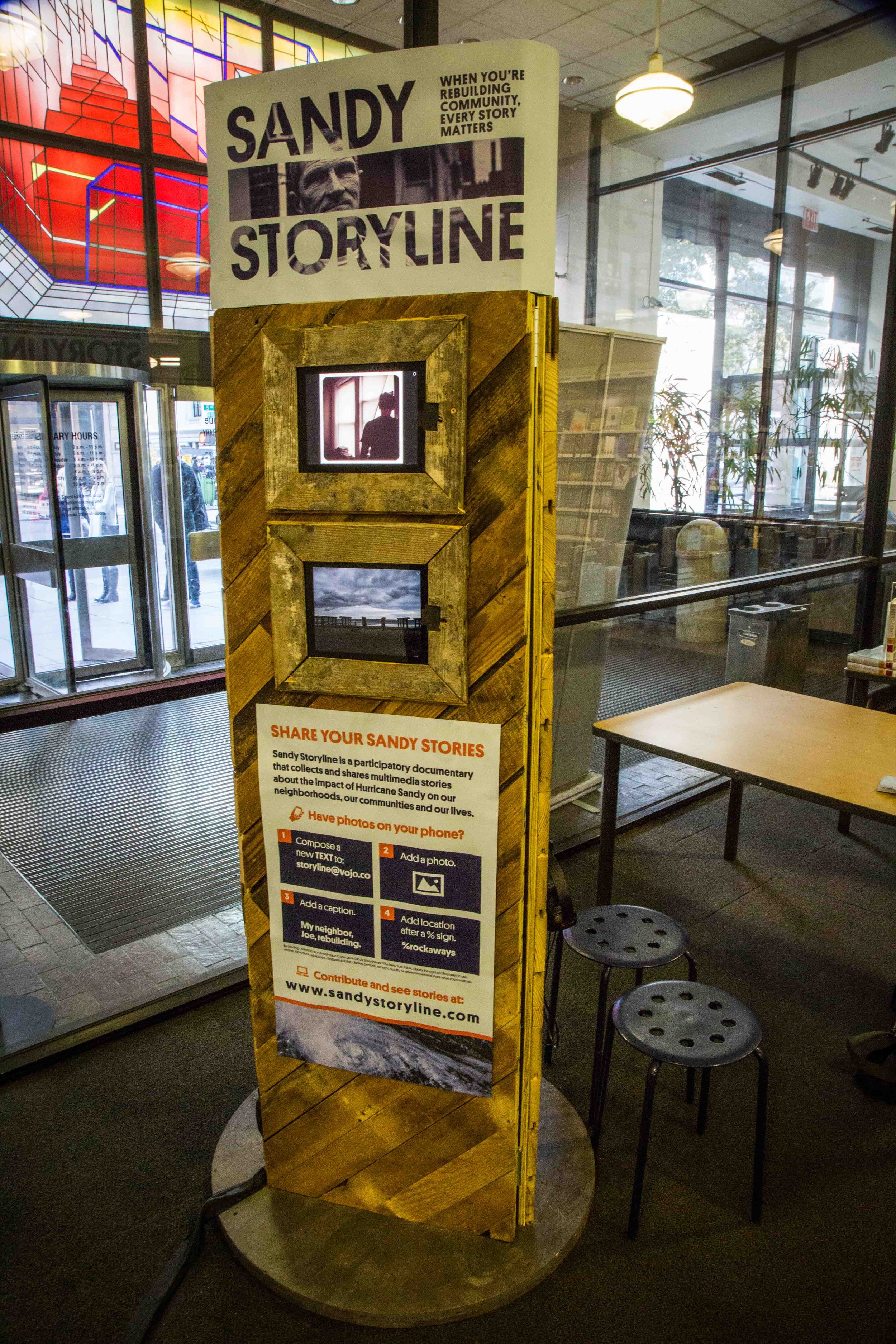
Educational Programs, and Pop-Up Events